By Mackin Bannon
Share

August 2, 2023

Data has never been more valuable than it is today. Specifically, laboratory data can be a precious asset. It’s timely, inexpensive, and it provides the ability to paint an objective picture of the patient’s health that you cannot get from any other source of data.

However, the healthcare industry has a data problem. It’s estimated that about 80% of medical data collected today is ignored, unsaved or abandoned, providing no benefit to patient care after the encounter. However, much of this data could contain “vital clinical and business-related insights.”

Laboratories are in a great position to leverage the vast amount of valuable data in their care to revolutionize how healthcare is delivered. However, many labs struggle to do this due to limited resources and systems that aren’t designed to leverage large amounts of data in aggregate.

hc1 is here to help.

For more than a decade, hc1 has been helping labs leverage their data to overcome the challenges that stand in the way of meeting their goals. We have the technology and expertise to make extracting insights from lab data quick and easy. 

We understand and work with laboratories’ native data format, extrapolating insights and risk signals to uncover actionable information. By creating a foundation of accurate and real-time insights, we open a world of opportunity for labs to overcome challenges, adopt a consultative approach and realize their full potential.

Below are three ways in which hc1 has helped clients unlock the value of their data to revolutionize their labs.

Uncovering inefficient test ordering practices to improve patient care and reduce costs

Lab testing is the single highest volume medical activity within a health system, yet 20% of hospital inpatient lab testing is unnecessary and has no direct impact on the patient’s care. However, labs typically lack an easy way to gain insight into providers’ ordering behavior and manage test ordering guidelines, so they can drive change and track improvement. 

hc1’s PrecisionDx Advisor™ solution combines real-time insights with expert-backed recommendations to surface unnecessary testing patterns, enabling labs to align guidelines with test utilization goals and drive change across an organization.

hc1 clients have used this solution to save tens of thousands of dollars while improving patient care by:

  • Reducing concurrent Amylase and Lipase orders by 47%
  • Reducing concurrent CKMB with Troponin orders by 58%
  • Decreasing overall order exceptions by 44%

Optimizing staffing and processes to reduce burnout and improve lab operations

With labs facing staffing shortages and demands to reduce costs, being able to work efficiently and track performance is of the utmost importance. But often, data and processes are scattered across a variety of disconnected systems and spreadsheets, wasting valuable resources and leading to employee burnout and turnover.

The hc1 Lab Insights Platform™ connects disparate lab data sources to uncover meaningful insights while enabling lab teams to collaborate in real time and work more efficiently.

hc1 clients have used our Lab Insights Platform to:

  • Optimize 25+ internal processes
  • Gain 32 additional days of sales field time per year
  • Reduce overall workload by 6.25%

Gaining clear visibility into lab operations to improve customer service

Software systems used in the laboratory are often not built with the lab in mind and don’t communicate well with one another, making it difficult and time-consuming to resolve customer issues quickly and collaborate across departments. Labs can’t easily access and analyze their data to gain insight into provider relationships.

hc1 Operations Management™ is a relationship management solution designed specifically for labs. It brings sales, service and operations workflows onto a single platform to empower lab teams to collaborate in real-time to enhance customer relationships.

hc1 clients have used Operations Management to:

  • Satisfy 90% of day-to-day client services operations
  • Retain 99.5% of current business

You can unlock the value of your data and revolutionize your lab, let us show you how! Schedule your custom demo today and be on your way!

_______________________________________________________

Mackin Bannon is the product marketing manager for hc1. Before joining hc1 in 2022, Mackin held a variety of roles covering nearly every area of marketing before settling on product marketing as a focus. During the workday, he enjoys bringing stories to life in clear and creative ways. In his free time, he enjoys following his favorite sports teams, collecting vinyl records and exploring Indianapolis.

By Mackin Bannon
Share

July 5, 2023

I recently entered into one of the most life-changing seasons a person can experience – I became a parent for the first time. My wife and I welcomed our daughter into the world on May 1, and the two-ish months that have passed since have been a whirlwind, to say the least. Between the never-ending barrage of dirty diapers, trying to find sleep whenever we can and balancing three very different schedules, it’s been a major adjustment and learning experience for both of us.

Which leads me to this blog. As I’ve made the transition back to work and have had time to reflect on my experience, I’ve discovered some valuable lessons about work, parenthood and life that I thought might be worth sharing.

Parental leave is a must

I’m fortunate enough to work for a company in hc1 that offers all non-birthing parents four weeks of fully-paid parental leave. I will be forever grateful for the opportunity to spend that time at home bonding with my daughter and supporting my wife as she does the heavy lifting of caring for a newborn. 

I hope more and more companies follow the lead of hc1 and others to give this same opportunity to all new parents – both birthing and non-birthing. It is such a brief but very important time for both parents and baby, and that time spent bonding as a family is priceless.

Routine is a (very) good thing

I’d be lying if I said I didn’t miss all the time I got to spend with my daughter while on leave. However, it has been good to return to a more normal rhythm and routine since returning to work. Having that structure in my weekdays has helped me be able to focus more intentionally when I’m home.

I’ve learned even more about the importance of routine at home when navigating life with a newborn. Getting anything done requires a significant amount of planning and coordination, sometimes down to the minute. Being able to set consistent times and structures for the daily tasks and household chores we can’t go without has been helpful.

Balancing work ethic with work-life balance

Humans are designed to work, have a vocation and have a purpose outside of our families. Finding the right balance between those professional and personal purposes is essential, especially for parents. 

As I’ve thought about what that looks like for me as I enter this new season of fatherhood, I’ve looked back at my own father and the way he modeled work-life balance. I can count on one hand the number of times I remember him staying late at the office or working weekends. He worked hard for those 40 hours a week but then ensured he was there for me, my brother and my mom.

I’m thankful that hc1 fosters a culture of flexibility and balance. I hope that as my daughter grows older, I can show her how to balance work ethic with work-life balance – just as my father showed me. 

If you’re looking for a new job and a supportive, flexible culture with paid parental and family/medical leave is important to you, look at hc1’s careers page for a list of open positions.

Mackin Bannon is the product marketing manager for hc1. Mackin held various roles covering nearly every area of marketing before settling on product marketing as a focus and joining hc1 in 2022. During the workday, he enjoys bringing stories to life in clear and creative ways. In his free time, he enjoys following his favorite sports teams, collecting vinyl records and exploring Indianapolis.
By Lorri Markum
Share

June 21, 2023

Why is it important to be a consultative lab?

Being a consultative lab is vital to delivering the highest-quality care to providers and their patients. Becoming a consultative lab is a strategy focused on building relationships, understanding problems and developing solutions that provide valuable and actionable insights to the care team.

In a recent article by Jaime Noguez, Ph.D., DABCC, building high-performing teams within the clinical lab space is becoming increasingly important. A consultative approach can further enhance the lab’s expertise as part of that team-building effort. But where do you start? 

There’s no all-encompassing roadmap that works for every lab. The key is knowing the unique issues your lab faces. Are there issues involving a high number of missed specimens? Are your providers not utilizing the best available tests? Knowing your top pain points is key to providing a consultative approach to resolving them. Think of it this way-your lab staff knows what tests are available within your lab and which tests offer the best benefits, but if providers aren’t aware of these tests, they may be ordering outdated or less valuable testing, which can result in a lesser quality of care for the patient and higher costs.

As a consultative lab, a high level of trust and expertise is gained. Providers and administrators can learn a deeper understanding of the available resources, which can also provide insights into budgetary bottom lines. Consultative labs can offer education on the most up-to-date testing, recommend specialty tests and work together to achieve exceptional patient care.

Taking intentional steps 

Tap into something that is already at your disposal. Data. In a recently published whitepaper, Four Steps Toward Becoming a More Consultative Laboratory, lab data is emphasized as being an essential asset and untapped resource. It’s timely, inexpensive and provides the opportunity to present an objective picture of the patient’s health that cannot be derived from any other source of information. 

The bottom line is by organizing your data so that it can be leveraged into a single source of truth; your lab can leverage the insights available in that data to offer your clinician customers more than just a result. Organized lab data can reveal information that empowers medical decisions that are critical to the healthcare system.

Now that you have a clearer vision of the value of being a consultative lab you can begin taking your first steps in becoming part of high-quality healthcare decision-making. Download the whitepaper, Four Steps Toward Becoming a More Consultative Laboratory and begin taking your first steps to align your lab to be a vital part of the decision-making care team. 

For more than ten years, hc1 has been working with labs and their data and has a pre-built solution to help your lab become a consultative laboratory leader for your customers and a thought leader in your field. hc1 often partners with lab leaders who wish to share their experiences with others by presenting at laboratory industry conferences and webinars, as well as in trade publications and case studies. Let us help you take your seat at the table!

____________________________________________________________________________________

Lorri Markum is the marketing manager for hc1 Insights and has over two decades of corporate and nonprofit marketing leadership experience. Lorri specializes in B2B marketing and is SEO Certified. A graduate of Ball State University with a degree in psychology, digital communications and storytelling. For the past 25 years, Lorri has been a professional commercial photographer and photojournalist in the music industry. Before joining hc1 she served as the marketing manager for a nonprofit healthcare organization, serving 40 counties throughout Indiana.

By Ginger Hart
Share

May 17, 2023

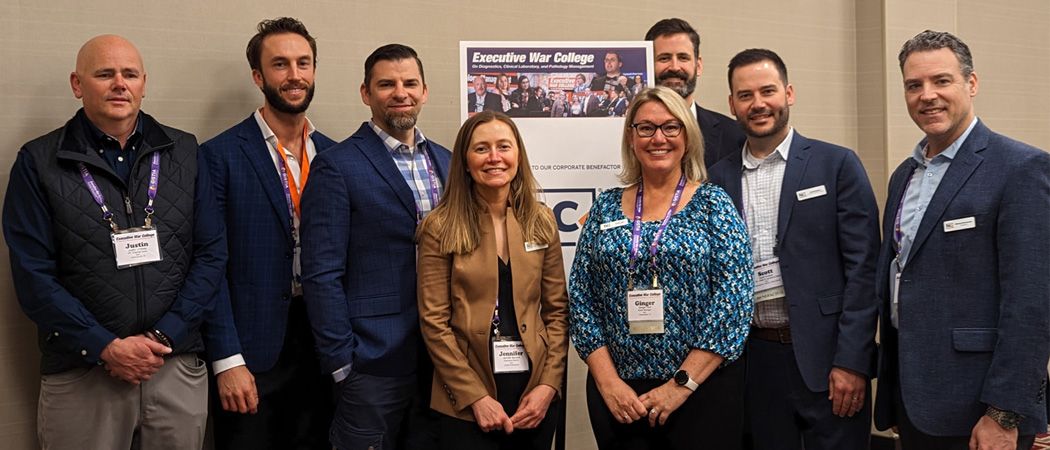
What a great start to Q2 – 2023!  At the end of April, ten hc1’ers made the trek to The Big Easy to attend the Executive War College (EWC) in New Orleans, the world’s largest event focused exclusively on the management of medical laboratories and the ecosystem that supports them. Not only was hc1 a Benefactor Sponsor for this premier event, we also had three incredible opportunities to present to more than 950 leaders of the nation’s most innovative labs.

The success we saw from attending EWC in 2022 made it easy for us to go all-in for this year’s event to increase our visibility and impact. We also expanded our sponsorship to become one of the top event sponsors, doubled our onsite team presence and went from one speaking session in 2022 to three sessions in 2023. 

“EWC is such a great way for us to connect with other lab leaders, current clients and prospects and to spend time with our hc1 team,” said Jennifer Maxwell. 

There is an energy at EWC that is hard to explain unless you’re there in person to experience it. The onsite EWC team has brought that energy back to hc1 with renewed determination and motivation for improving healthcare. 

“EWC is a premier conference for sales prospecting due to the vast number of lab leaders in both the commercial and health system space,” Scott Hudson, senior director of sales and operations management at hc1 said. “The conference provides the exciting opportunity to further develop existing relationships with our lab contacts and establish many new connections as well. The three speaking sessions led by our hc1 team members allowed us the opportunity to showcase our unique capabilities of leveraging lab data to generate actionable insights and create an overall buzz about hc1 at the conference.”

The first full day of the conference was huge for hc1. Kicking off the Tuesday morning session was our Executive Director of Client Success, Jennifer Maxwell and Zac Zahara, COO of Laboratory Services, MultiCare Health System. During their presentation, “Leveraging Real-Time Operational Lab Data Across 11 Hospitals to Track Workflow, Staff Productivity, and Manage How Physician Clients Benefit from Lab Testing,” the attendees learned how MultiCare is leveraging hc1 Insights to drive accountability, workflow changes and education paths in the health system’s lab. 

Just before the lunch break, hc1 chairman and CEO Brad Bostic took the main stage in front of 500+ attendees and discussed the current state of Big Data and the lab’s opportunities in transforming healthcare. During his “Generating Value by Identifying Risk Signals in Longitudinal Lab Data: Opportunities in Big Data with Payers, Physicians, Pharma, and Bioresearch” presentation, he shared the possibility large language models, like ChatGPT, have to transform healthcare delivery, as well as the potential for perilous consequences if left unchecked (see: Hal 9000 from Stanley Kubrick’s 1968 film 2001: A Space Odyssey)

Day 2 at EWC was off to another busy start for the hc1 team. Our VP of Data Strategy, Chuck Girard, and Olivia Choudry, Ph.D., senior partner solutions architect, AWS, led a benefactor session presentation. Presenting “Using Machine Learning and AI to Unlock the Full Value of Your Laboratory Data” to an almost-capacity crowd, Chuck and Olvia shared how unlocking the hidden value in lab data can create added benefits and differentiate you in the lab space. 

Although the team spent a very busy 72 hours in New Orleans, several new connections were made and existing relationships were strengthened.

We are already looking forward to and planning for Executive War College 2024!

Between now and then, we have more exciting in-person opportunities to make connections and share our solutions and experience with the lab industry. 

Next up for the hc1 team is ASCLS, AGT & SAFMLS JAM in Providence, RI, June 26-30. Jennifer Maxwell will again take the stage, this time with Brandy Gunsolus, DCLS, MLS (ASCP) CM, doctor of clinical laboratory science,  Augusta University Medical Center, and Brooke Whitaker, DCLS, MLS(ASCP)cm, manager, clinical laboratory, Novant Health Rowan Medical Center. You can find us at our hc1 booth in the exhibit hall and onstage during our Commercial Symposium (time and location TBD). John Moyer, sr. product manager and Adam Sajewich, dir. of high-value care will introduce hc1 Workforce Optimization™,  our exciting new solution that will ease the burden of insufficient staffing in clinical labs. 

The following month we’ll be heading to the West Coast, July 23-27, for the 2023 AACC Annual Scientific Meeting and Clinical Lab Expo, the largest event we’ll be attending in 2023. With 17,000+ people, hc1 will be one of 750 exhibitors. We will showcase hc1 Insights solutions at our booth and present a lecture series session alongside AWS. Watch our events page at hc1.com/events for more information and for more upcoming events. To be sure not to miss seeing us at events nationwide—sign up to join our hc1 events mailing list!

___________________________________________________________________________________

Ginger Hart has served as the Events Manager at hc1 since 2021. Before joining hc1, Ginger worked in event management in the pharma industry. Before entering healthcare, Ginger was an Events Manager at Google HQ in Silicon Valley, CA, for 11 years. She currently lives in Zionville.

By Mackin Bannon
Share

May 3, 2023

Staffing is the biggest problem labs are facing today. Between fallout from the COVID-19 pandemic, the Great Resignation and a decline in laboratory training programs, there is a significant shortage of laboratory professionals. In fact, a recent survey uncovered that 73 percent of respondents indicated their laboratories were understaffed. 

As lab professionals are being asked to do more with less, there are several risks. When lab departments are understaffed, it can lead to missed benchmarks and increased turnaround time. Additionally, understaffing can lead to burnout and the loss of even more resources – 85.3% of respondents to a survey by the American Society for Clinical Pathology reported having felt burnout as a laboratory professional.

Given the high stakes, it’s critical that laboratories ease the burden on their staff in the face of today’s labor shortages. Here are three steps labs can take to optimize their staffing.

1. Leverage timekeeping data to better understand staffing

The first step is to take a deeper dive into your lab’s timekeeping data. Looking at your staffing levels at particular times of day and days of the week, as well as seasonally, will help you gain a better understanding of your workforce. Maybe you need to shift some staff from one shift to another, or you need to hire additional staff during particular seasons you know are busier. Certain departments may be short-staffed, while others have more than enough staff.

2. Gain a clear picture of lab volume trends

It’s also important to look at volume trends. Similar to the review of staffing levels, look at your volume during particular times of day, on each day of the week and seasonally. Are your volumes lower in the morning but spiking in the afternoon? Are you busier on certain days of the week? Additionally, break down your volume by department to look for further trends. Does your molecular testing skyrocket during flu season? Do anatomic pathology tests tend to come in early or late in the week?

3. Connect staffing data with volume data to optimize staffing

The final step is to combine all this data and its insights to identify opportunities to optimize staffing. By bringing timekeeping and lab testing data together, you can ensure that you have the right amount of staff to cover the volume of tests coming into your lab.

For example, you may find that test volumes are typically higher on Saturdays, but your staffing levels are typically lower. You may need to incentivize more staff to work Saturdays so that you can ensure turnaround times do not suffer.

Maybe you’ve seen volumes decrease over the last couple of months in a specific department – possibly due to the loss of some key accounts – but staffing levels have remained the same. Instead of continuing on with more staff than is needed, you could train and reassign some individuals to another department that is short-staffed.

Making the Connection

While this may sound like a great way for laboratories to address labor shortages, with current lab technology it is a difficult and time-consuming process. Since timekeeping software and lab information systems don’t typically interface with one another, labs are left to manually download, compile and sift through the data looking for insights, a process that lab leaders don’t have time for.

For this reason, hc1 is developing a new solution to connect timekeeping data with lab testing data to optimize staffing based on volume by department.

hc1 Workforce Optimization™ will leverage historical data, real-time trends and AI to forecast lab volume and provide staffing recommendations in a near-turnkey solution, ensuring lab departments and teams are adequately staffed based on their expected workload.

hc1 is offering a limited opportunity to be one of the first to obtain hc1 Workforce Optimization and experience its benefits. Request a demo today to learn more.

__________________________________________________________________________________

Mackin Bannon is the product marketing manager for hc1. Mackin held a variety of roles covering nearly every area of marketing before settling on product marketing as a focus and joining hc1 in 2022. During the workday, he enjoys bringing stories to life in clear and creative ways, and in his free time, he enjoys following his favorite sports teams, collecting vinyl records and exploring Indianapolis.

By Mackin Bannon
Share

June 7, 2023

When critical and urgent test result notifications are needed, speed, organization and efficiency are essential. Ensuring providers receive timely notification of results enables the patient to receive immediate and appropriate care. It also helps the lab meet service-level agreements and maintain strong relationships with providers.

However, critical and urgent notifications do not come without significant effort and coordination by the lab. Failure to notify providers in a timely fashion can lead to diagnostic errors, missed treatment and liability claims. The key for labs to avoid these pitfalls is collaboration across teams and departments.

Collaborating to ensure critical and urgent results are identified

First and foremost, it’s critical that staff across the lab—technicians, analysts, service reps, etc. are aware of the critical and urgent thresholds. Ideally, technology will be in place to trigger and alert when a test result crosses these thresholds and all appropriate staff will be notified. This ensures that critical and urgent results are not missed.

Collaborating to ensure the right staff have the right information

It’s equally important that teams collaborate across departments to ensure the right staff has the right information to notify providers of the results. The handoff of information as fast as possible from the technician or analyst that ran the sample to the service rep or individual responsible for contacting the provider is of the utmost importance. Again, technology that triggers a notification or creates a case for the service rep can ensure that critical and urgent results are acted on quickly.

Collaborating to ensure providers are notified in a timely manner

Lastly, it’s critical for the team communicating results to providers to have protocols and processes in place for collaboration. There should be a methodology for assigning result notifications to individual team members or allowing them to claim them as they come in. Collaborating and communicating within the team ensures that no one team member has too many calls on their plate and that the highest-priority results are handled first. Technology can help automate this process and take the burden off team members and managers.

Technology to help foster collaboration

We’ve seen how important cross-departmental collaboration is to ensuring providers receive timely notification of critical and urgent results. However, many labs still rely on manual processes, making it difficult to assign ownership and take action in a timely manner. Additionally, with processes and documentation often varying between different individuals and teams, it is hard to ensure a consistent and standardized response. Ultimately, delayed action on time-sensitive results impacts patient outcomes and provider satisfaction.

hc1 offers technology to help labs collaborate more effectively and take immediate action on critical and urgent test results.

hc1 Rapid Response Queue™ generates and prioritizes automated workflows based on clinical results and information pulled directly from the EMR or LIS, enabling teams to collaborate with real-time visibility and clear ownership of time-sensitive notifications. This enables labs to create a standardized process for critical and urgent result notifications, ensure required information is captured and documented, and help create positive patient outcomes when minutes matter.

Are you ready to enhance your critical and urgent workflows across departments? Request a demo today.

_______________________________________________________________

Mackin Bannon is the product marketing manager for hc1. Mackin held a variety of roles covering nearly every area of marketing before settling on product marketing as a focus and joining hc1 in 2022. During the workday, he enjoys bringing stories to life in clear and creative ways, and in his free time, he enjoys following his favorite sports teams, collecting vinyl records and exploring Indianapolis.

By Heather Stith
Share

April 19, 2023

Way past 5 o’clock at hc1 headquarters the night before the launch, hc1 Director of Client Enablement Maura Lee and hc1 Client Coordinator Alyssa Castille are laughing hysterically, and I’m feeling pretty slaphappy, too. We decide it’s time to stop tinkering with hc1 Academy, the customer education platform project we’ve been working on for months and head home. On launch day, we hosted webinars introducing the revamped platform and received positive responses from customers and internal users. Success! But getting to this point was a challenge.

The hc1 Technology department follows an Agile scrum process to develop software, where each scrum team plans the deliverable work it can accomplish in a two-week timeframe, called a “sprint.” The scrum master leads short daily meetings (stand-ups) to uncover obstacles and keep the team on track. At the end of the sprint, the team shows their work to everyone and then holds a closed meeting, called a retrospective, to openly discuss what went well, what problems occurred and what improvements could be made. This process serves to reduce risk by breaking down bigger projects into smaller tasks and provides the flexibility to incorporate feedback and adapt to changing circumstances.

The hc1 Client Success team’s process in developing the new hc1 Academy was more ad hoc than Agile, but we did borrow the idea of a retrospective to wrap up the project after launch. Here’s what we learned. 

Measuring Success

Last year, Maura was looking to strengthen the customer focus of the learning management platform she used to deliver product training:

  • Instead of relying on email campaigns, she wanted an interactive webinar registration process, with customers choosing the topics that interested them. 
  • She wanted to build a certification process to document customers’ level of expertise with the hc1 Platform.
  • She wanted to tailor the learning management platform to serve the needs of all customers, from prospects to partners, from seasoned system administrators to new users.

Around the same time, as senior technical writer, I was investigating options to replace the online help platform, because it wasn’t going to be supported for much longer. Also, customers and internal users had provided feedback indicating that finding the information they were looking for was difficult. I wanted the new platform to be more visually appealing and have a variety of ways to boost relevant content to users. I also wanted users to have an easy way to provide feedback on content, so I could make meaningful revisions quicker. Having all client training and customer-facing product documentation in one spot would be more convenient for both hc1 customers and the hc1 Technology team, so Maura and I decided to join forces.

The launch of the new and improved hc1 Academy achieved these defined goals and gained a few unexpected benefits:

  • We made our team more resilient. Before this project, Maura and I were the only administrators and subject matter experts for our respective platforms. Now, we, along with Alyssa, can together help maintain content and troubleshoot issues more efficiently.
  • We collaborated in new ways. In our day-to-day roles, our team is typically the one helping other teams achieve their goals by documenting, building training for, or communicating with clients about the work being done. This time, we were the ones driving the process, assigning the work and meeting with internal stakeholders. We had to make sure our user interface changes were approved by the product team and assigned to a technology sprint. We tapped into marketing’s design expertise to make sure the new hc1 Academy was both user-friendly and appropriately branded. We recruited coworkers to run through our user testing plans. We gained a new appreciation for the multiple talents throughout hc1.

Facing the Problems

The first few meetings with our learning management platform vendor representatives did not go well. The level of guidance we had anticipated from them was not what they were set up to deliver. After much frustration, we had to pause the project for several months and regroup. When we restarted it, we knew we had to drive the process and be much more specific about what the project needed to make the most of our professional services time.

One important change we made was that we stopped trying to share project management tasks. We put Alyssa in charge of communicating with the vendor, keeping our project meetings on track and following up on issues. This change allowed Maura and me to focus on building content.

In addition to facing the external challenges of working with an outside vendor, the team faced some internal challenges. I knew this project would require me to add to my technical skills because I had to learn how to use the learning management platform. What I wasn’t anticipating was the need to improve my interpersonal skills. I was surprised at my defensiveness when it came to suggestions about how to organize the knowledge base content I had spent years maintaining on my own. I had to step back and remind myself about what the team as a whole was trying to achieve.

Looking Back to Move Forward

hc1 is all about actionable insights, which means that we provide data to our clients in a way that they can easily use it to improve healthcare delivery. Likewise, the value of a retrospective isn’t just to document work—it’s meant to provide a path for continuous improvement. 

As anyone who’s responsible for a customer education platform knows, it is a project that never ends. There’s always something that needs to be added, removed or improved upon. But the lessons learned from the recently launched hc1 Academy project have applications for other areas of work our team does as well, such as:

  • Making sure we are aligned with our customers. We can’t assume that we have the same expectations or information as they do going into a project.
  • Allowing time for learning. Curiosity is one of hc1’s core values for a reason. Every project offers an opportunity to learn something new.
  • Documenting our process. No surprise, the tech writer thinks there should be more documentation. But when I was in the throes of doing the work for this project, even I had to remind myself to stop and jot down a note or two about the decisions I was making to share with the rest of the team. Good documentation helps teams function better.

To learn more about how hc1 Executive Director of Client Success, Jennifer Maxwell, helps hc1 customers improve healthcare through actionable insights, attend one of the hc1 presentations at laboratory events this spring and summer.

If you’d like to collaborate with the hc1 Client Success team, check out hc1’s open positions for software engineers.

Finally, if you are an hc1 customer, have you checked out the new hc1 Academy yet? Let us know what you think

_________________________________________________________________

Heather Stith is the hc1 senior technical writer. Before joining hc1, she edited dozens of nonfiction and how-to books, helping subject matter experts from a variety of fields share their knowledge with readers.

By Mackin Bannon
Share

April 5, 2023

Staffing is one of the biggest challenges facing laboratories of all types. According to a recent survey, only 27% of lab professionals feel their labs are adequately or well-staffed. Among those who felt their labs had staffing issues, only 32% said they were moderately or extremely satisfied with their careers. 

Not only are labs having a hard time finding candidates to fill their open positions, but they are also at risk of losing the staff they do have due to dissatisfaction and burnout.

To combat this, labs can look for ways to reduce the burden on staff while still maintaining testing volume and turnaround time targets. Investing in technology is a great way to help staff work more efficiently and focus on more meaningful tasks, while still hitting or even exceeding volume and performance goals.

Here are some steps labs can take to increase productivity and efficiency using technology.

Going digital

As digital technology has rapidly advanced over the past 20–30 years, most labs have transitioned at least some of their functions from manual to electronic, such as orders and results, integrations with analyzers and billing. For example, a recent survey showed that less than 20 percent of labs have moved to electronic processes for inventory/supply chain management and customer service.

Digital solutions greatly reduce the amount of manual, time-consuming tasks required of staff. A customer service representative, for example, can log and track cases and send communications from a single interface with just a few clicks—no paper or data entry is required. Additionally, it is much easier to track activity and analyze data with a digital software solution, compared to manually entering information into spreadsheets. Selecting a system that can ingest data from the LIS and other existing lab systems reduces time spent shifting between systems and provides a single source of truth. 

Connecting the lab

The next step for increasing productivity and efficiency is modernizing infrastructure to connect the lab’s various machines and digital systems to one another. This helps eliminate repetitive tasks caused by a lack of communication between systems and devices, reduces the risk of human error and enables easier collaboration across departments or locations.

As Suren Avunjian, CEO of LigoLab, put it, “Human intervention in the laboratory and manual workflow can only take you so far before the potential for mistakes and bottlenecks become major issues and threats to the business. Modern laboratories eliminate this risk by automating core processes and introducing interoperability with analyzers, EHRs, and third-party services like billing companies.”

Automating routine tasks

Automation is another key to taking your lab’s productivity and efficiency to the next level. According to Forrester’s study, “The Lab of the Future is Here”: “The lab of the future is always on. It is automated and connected to the benefit of the (internal or external) customer, the employee, and ultimately the business.”

When routine and administrative tasks are automated, staff are empowered to work at peak capacity on more meaningful work, leaving them more satisfied and less likely to feel burnt out. Automation can also help drive faster turnaround times, leaving providers and patients more satisfied, and enabling labs to take on more volume and grow their business.

Leveraging AI and Machine Learning

Some of the biggest buzzwords today are artificial intelligence (AI) and machine learning (ML). But for the lab, AI and ML can truly provide significant value. These innovations can further enable labs to automate tasks, reducing the burden on staff, while also optimizing processes to drive superior performance.

AI and ML can also produce predictive analytics that help labs more accurately identify trends and results and act faster on those insights, as well as assist laboratory scientists with analyzing specimens faster and more accurately.

Next Steps

Different labs are going to be at different stages of this technological journey. Whether you’re just starting to digitize your systems and processes or you’re already implementing artificial intelligence and machine learning, the important part is that you’re working toward leveling up your lab and providing a great work environment for your staff.

For more than a decade, hc1 has been here to walk alongside labs for every step of this journey.

The hc1 Lab Insights Platform™ connects your disparate lab data sources on a single platform, helping you leverage the insights within your own data to optimize operations, engage with providers and inform testing and treatment decisions. 

hc1 Operations Management™ empowers your teams to collaborate in real-time to uncover meaningful insights, work more efficiently and enhance customer relationships, while hc1 Performance Analytics™ enables you to leverage your vast amount of valuable data to uncover meaningful insights, identify risk signals and deliver proactive service.

Are you ready to take your lab’s productivity and efficiency to the next level? Request a demo today.

________________________________________________________________

Mackin Bannon is the product marketing manager for hc1. Mackin held a variety of roles covering nearly every area of marketing before settling on product marketing as a focus and joining hc1 in 2022. During the workday, he enjoys bringing stories to life in clear and creative ways, and in his free time, he enjoys following his favorite sports teams, collecting vinyl records and exploring Indianapolis.

By Ginger Hart
Share

March 1, 2023

It’s 2023 and if you’re an event manager, like me, or you just enjoy networking and meeting people in person, our prayers have been answered! We finally have a full year of in-person event opportunities!

This couldn’t come at a better time for hc1. We have great solutions and need a way to introduce and share them. Getting our sales team in front of the right audience is key. Events allow us to meet with current and potential clients face-to-face and stay on top of industry trends and topics.

Some conferences still continue to look and feel a bit different than pre-COVID events. Several offer hybrid participation options, which doubles the strategy and execution for sponsors and presenters. The same content may resonate with both in-person and virtual audiences, but the presentation, delivery and follow-up are vastly different. It’s much easier to gauge an audience’s reaction when you’re in the same room.

With a solid post-COVID event year under our belt, it was easy to decide where the hc1 team needs to be this year. For 2023, we have a busy schedule of events taking place throughout the country and I couldn’t be more thrilled!

Event sponsorships, cocktail receptions, product theater, speaking sessions and more are all on the docket for us this year. Sponsoring events gets our name out there, but also helps further the great work organizations and individuals are doing in the lab industry. Speaking sessions and product theaters provide us the opportunity to team up with clients and share what they are achieving with hc1 solutions. By sharing our stories, we are able to inform labs about what is possible today. We often host cocktail receptions as a casual environment in which to network and further conversations with hospital, health system and independent lab leaders.

hc1 kicked off 2023 at ASCP KnowledgeLab in Scottsdale, Arizona. Next up for our team is Executive War College (EWC) in New Orleans from April 25–26, where hc1 is a Benefactor Sponsor. This is a premier event for hc1. We have the amazing opportunity to present to leaders of the nation’s most innovative labs not once, not twice, but three times! Our chairman and CEO, Brad Bostic, will present on the main stage and our Executive Director of Client Success, Jennifer Maxwell, will join a Master Class session alongside Zac Zahara, COO of Laboratory Services, MultiCare Health System, and our VP of Data Strategy, Chuck Girard, will conduct a benefactor session presentation with Olivia Choudry, Ph.D., senior partner solutions architect, AWS. In addition,  hc1 would love to meet with you there – to request a private meeting time, just complete our meeting request form. It’s going to be an exhilarating few days!

Our team will get a bit of a rest, but we’re right back at it in June as we plan to attend ASCLS LabJAM. Jennifer Maxwell will again take the stage, this time with our friends from Augusta University Medical Center, Department of Pathology—Brooke Whitaker, DCLS, MLS(ASCP)CM, manager, pathology laboratory utilization; manager, microbiology laboratory and Brandy Gunsolus, DCLS, MLS (ASCP) CM, doctor of clinical laboratory science. You’ll also be able to find  hc1 in the exhibit hall there.

In July, we’ll be heading to the West Coast for AACC. This is the biggest event we’ll be attending in 2023. With 17,000+ people, hc1 will be one of 750 exhibitors. This event gives us the opportunity to showcase our solutions at our booth and during a product theater session. 

In between these in-person events, hc1 will host webinars showcasing our latest lab solutions. Watch our events page at hc1.com/events for more information. 

We are so grateful for these opportunities and love sharing what we do with the lab industry. We have a packed schedule for this year and wouldn’t want it any other way. No rest for an innovative company with a lot to share!

Be sure not to miss seeing us at an event—sign up to join our hc1 events mailing list!

______________________________________________________________________

Ginger Hart is the hc1 Events Manager at hc1 since 2021. Prior to joining hc1, Ginger worked in event management in the pharma industry. Before entering healthcare, she served as an Events Manager at Google HQ in Silicon Valley, CA for 11 years. She currently lives in Zionville.

By Lorri Markum
Share

February 23, 2023

You’ve heard the phrase before, knowledge is power, but often knowledge can be perceived as something that should be coveted, not shared. However, quite the opposite is true in relation to the value of sharing knowledge, as identified in the Forbes magazine article, “Knowledge Is Power—And Why You Should Share It”, particularly when it comes to electronic data. 

hc1 has an educational webinar for the healthcare community, particularly for leaders of health systems, hospital laboratories and lab stewardship committees, as well as chief medical officers and VPs of ancillary health services, showcasing how real-time lab testing data insights can empower lab leaders to help create efficiencies and improve care by uncovering where provider test ordering habits are not aligning with testing best practices.

Four ways to reveal provider ordering behavior that can reduce costs and improve patient care is presented by hc1 experts, Tawni Reller, MA, BS (MLS, ASCP), product manager, and Adam Sajewich, executive director of high-value care, a 30-minute webinar available now for on-demand viewing by clicking here.  

Sajewich opens the webinar with a brief overview of how hc1 has been helping labs for more than 11 years to extend their capabilities by leveraging their data in a HIPAA-compliant, HITRUST-certified cloud environment to overcome the challenges that stand in the way of meeting their goals.

Whether it’s financial data in a billing system, patient data in an EMR or LIS, or timekeeping data––hc1 is an expert in organizing this information that is often siloed in existing systems and enriching it within hc1 to provide a more detailed story that wasn’t necessarily visible before. Bringing these systems and data information into hc1 solutions empowers labs to run more efficiently.

“Labs are in a unique position to provide extraordinary care by tapping into the vast potential energy in their data network in an ecosystem where nearly every clinical and operational decision is driven by data,” Sajewich said. “There’s a significant advantage to be gained with easy access to high-quality lab data from a single source of truth.”

As labs continue to be overwhelmed by supply and staffing shortages and tasked with improving quality of care, healthcare organizations need every opportunity to create efficiencies and improve care, particularly in the lab. Research has shown that approximately 20% of all lab tests are considered unnecessary, resulting in wasted resources and offering room for improvement in care.

Reller, a medical laboratory scientist of more than 25 years established as an expert in the use of quality indicators in both large and small clinical labs, jumps right in addressing four ways the hc1 platform can help reveal provider ordering behavior. She shares common issues prevalent in labs and provides detailed examples and explanations about ways to improve and overcome these obstacles to reveal real-time insights.

The Four Key Areas

Duplicate Detection is the first issue Reller demonstrates using demo hc1 Order Oversight™ dashboards, how more detail and information can be obtained to identify patients receiving repeat testing outside of established guidelines. Next in line is Concurrent Test Detection, comparing the concurrent utilization of specific tests that identify tests that should not be ordered together or monitoring tests that should be ordered together. The third, Encounter Test Frequency––looks at how many tests of a certain type by panel or testing are ordered by patient encounter. Lastly, Provider Ordering Behavior or the number of tests providers actually order by encounter.

With real-time insight into those four ordering patterns, Reller shows how labs can:

  • Improve quality of care by identifying testing outside guidelines or providers may be ordering outdated tests.
  • Target change to specific providers, medical groups or health system departments, monitor results, and tie into performance improvement projects whether the lab originates those or the lab data is a contributing factor.
  • Reduce cost by eliminating duplicate testing which is an across-the-board insight, it can tie into panel orders or profiles where individual tests are being duplicated.
  • Rein in unnecessary testing to better allocate resources. With the strain on the lab and healthcare workforce, inefficient use of resources is a contributor to unnecessary testing, ie: easier to just duplicate a test vs. trying to track down information supporting the order.

All four of these strategies are unified in supporting a lab’s initiatives in relation to how the data is communicated both internally or externally from the lab.

Key Takeaways

Unchecked overutilization of testing can reduce quality of care and increase costs for the lab, especially as both supplies and staff are lacking in abundance. In addition, the quality of patient care can be impacted in many ways, for instance, by identifying additional testing that may need to be reviewed because it may not provide value toward the patient’s overall care. Therefore, the test may not be necessary.

Health system and lab leaders can improve quality of care and reduce costs by identifying opportunities to align provider ordering habits and best practices. hc1 can provide actionable insights for the lab by tying into EHR, provider ordering systems, order sets and custom order sets by specialty/provider and identifying tests that are not providing patient care value. 

Finally, with real-time lab insights, health systems and lab leaders can target change to specific providers, specialties or medical groups and perhaps even the lab itself. The root cause analysis, performance improvement plans, initiation or monitoring are all supported by hc1 insights. 

The emphasis in all of these is that the true real-time data is the focus and removes the stigma that may be otherwise attached to individuals, groups or processes within labs and health systems. 

To learn more about how your lab and/or health system can benefit from hc1 analytics™ and additionally pairing it hc1 Operations Management™, you can access the webinar, Four ways to reveal provider ordering behavior that can reduce costs and improve patient care in its entirety on-demand, by clicking here.

________________________________________________________________

Lorri Markum is the marketing manager for hc1 Insights and has over two decades of corporate and nonprofit marketing leadership experience. Lorri specializes in B2B marketing and SEO optimization. Before joining hc1, she was the marketing manager for a nonprofit healthcare organization serving 40 counties throughout Indiana.