March 20, 2024
Clinical laboratories could be identified as the heart of any health system, as lab testing is the single highest-volume medical activity. However, labs are currently facing numerous threats that are placing a significant amount of stress on both organizations and lab professionals.
From staffing and supply shortages to higher costs and declining reimbursement, here are the top six trends putting clinical labs under stress.
Rising demand
Demand for diagnostic testing continues to rise, spurred by an increasing prevalence of chronic diseases and an aging population. In 2021, the Medicare program spent $9.3 billion on laboratory tests, marking a record 17 percent increase from the previous year. Noncommunicable diseases are widespread, particularly in the United States, where nearly 60% of adults live with at least one chronic condition. Globally, the aging population is also growing; the share of the global population aged 65 and older is projected to rise from 10% in 2022 to 16% in 2050. At that point, it is expected that the number of persons aged 65 years or over worldwide will be more than twice the number of children under age 5 and about the same as the number under age 12. In turn, the global clinical laboratory service market size is expected to expand at a compound annual growth rate (CAGR) of 3.2% from 2023 to 2030.
Higher complexity
Molecular and other advanced testing types firmly established a foothold in laboratories in response to the COVID-19 pandemic. Now that the value of PCR testing for infectious diseases has been widely recognized, laboratories are increasingly expected to expand the scope of their existing testing capabilities to include more analytes and observations. Demand for genetic testing is also increasing. By November 2022, U.S. physicians could choose from 129,624 genetic tests to order. These new tests can be highly complex and require new techniques, expensive reagents and equipment, as well as advanced skill sets.
Lower reimbursement
Labs may have more work to do but are getting paid less for it. They gained another year’s reprieve from significant Medicare reimbursement cuts as Congress delayed both PAMA cuts and a scheduled price data reporting period but saw drops in reimbursement from private payers as many took advantage of the 2022 rollout of the No Surprises Act to cut rates based on the newly visible pricing.
Higher costs
Overall, market prices for lab supplies, equipment and labor are increasing. Lab equipment and IT software prices are projected to increase an average of 4.2% from January 2023 to December 2023, while reagent, energy and labor costs are also expected to increase. Clinical labor costs are projected to grow 6 to 10 percent in 2023-24, about three to seven percentage points above the prevailing rate of inflation.
Supply shortages
The COVID-19 global pandemic brought with it lasting effects on the U.S. healthcare system, including numerous supply chain shortages impacting the availability of collection devices, reagents and other critical lab supplies. While many supply chain issues have been resolved, warehouse and port capacity shortages, as well as logistics staffing shortages, continue to cause disruptions in many areas. Through the summer of 2023, the U.S. Food and Drug Administration’s Medical Device Shortages List continued to include numerous specimen collection devices, transport media, laboratory reagents and testing supplies.
Staffing shortages
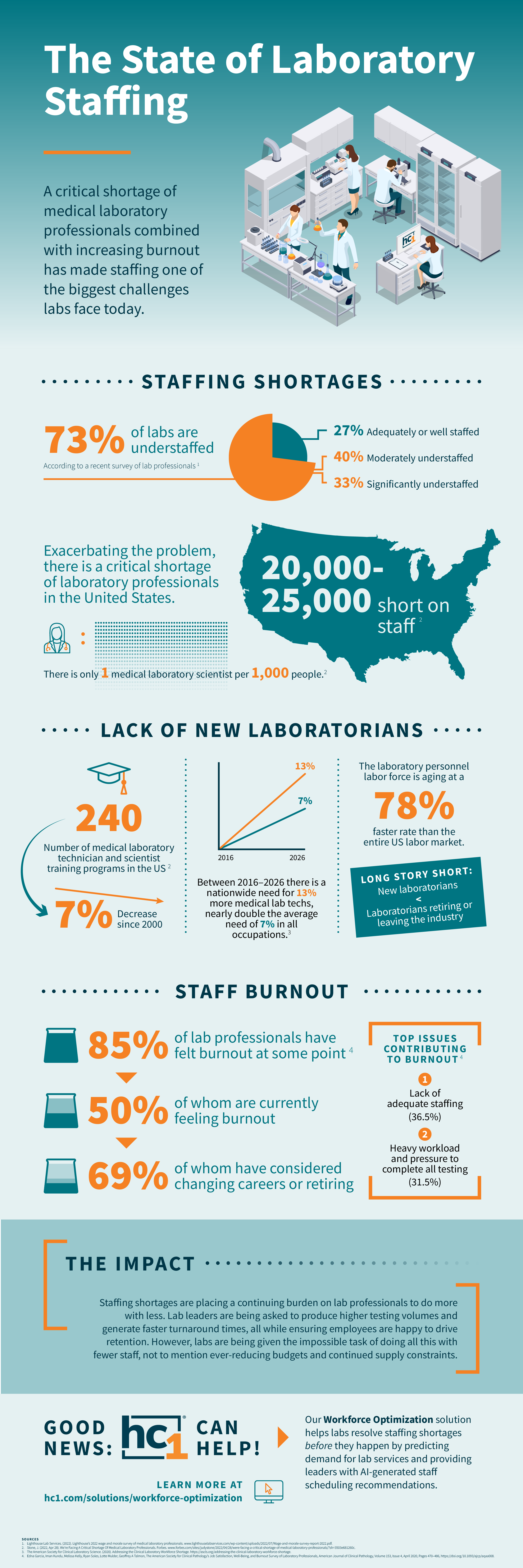
A shortage of approximately 20,000–25,000 laboratory staff is severely impacting U.S. laboratories, with overall vacancy rates highest for chemistry/toxicology departments at 12.7%. Understaffing in the laboratory not only threatens turnaround time and quality, but also worker satisfaction. A 2023 Wage and Morale Survey conducted by Lighthouse Lab Services found that staffing levels and satisfaction were closely linked. Among the 67% of respondents who reported their labs were moderately or significantly understaffed, 41% described themselves as extremely or moderately unsatisfied in their role.
How can clinical laboratories overcome these issues while also improving patient care? Lab data. When labs combine their expertise with an effective technology strategy, they can proactively remove data silos and unlock the hidden value in lab data to optimize operations and inform testing and treatment decisions. Request a demo today to see how hc1 can help your lab extract invaluable insights from your data to solve your biggest challenges.
_____________________________________________________________________________
Mackin Bannon is the product marketing manager for hc1. Mackin held various roles covering nearly every marketing area before settling on product marketing as a focus and joining hc1 in 2022. During the workday, he enjoys bringing stories to life in clear and creative ways. In his free time, he enjoys following his favorite sports teams, collecting vinyl records and exploring Indianapolis.