By Lauren VanDenBoom
Share

February 12, 2020

hc1 has announced a new iOS app companion for its popular hc1 Healthcare CRM™ solution. hc1 CRM users can now access the most highly used CRM sales features right from their iOS devices. 

hc1 Healthcare CRM™ streamlines communication and data sharing from sales activities to client and patient relationships to operations initiatives. Leaders use the highly customizable solution to seamlessly integrate, analyze, and visualize organizational metrics to quickly see value, track trends in real-time, and gain insights into relationships. 

Now with the hc1 CRM™ app, users can view, create, and edit hc1 CRM organization, contact, opportunity, case, task, and memo information with they are away from their desks. They can quickly review client activities before walking in the door, map the location for their next visit, or find contact information and initiate a call or email with just a screen tap. 

“The new app is intuitive and streamlined,” commented one user during the app’s testing period. “No noise –  just what our sales team needs to efficiently log interactions with clients and review past interactions on the go.”

hc1 CRM users can visit the iOS App Store to download and begin using the app today. To learn more, visit our CRM web page and join us for an upcoming webinar where we will discuss navigation of the app, multiple ways the app can make your sales process more efficient, and a live Q&A to answer your questions. 

By Lauren VanDenBoom
Share

August 23, 2021

“I’ve been often asked the question about personalized medicine and the practical nature of that, and, ultimately, will it ever be mainstream?” hc1 Chairman and CEO, Brad Bostic, recently told MarketScale. “My point of view on that is absolutely it will be. What I see happening right now within health care is this Renaissance that gives us a chance at getting there sooner rather than later.”

On August 31 and September 1, attendees at the 2021 Precision Health Virtual Summit hosted by hc1 and Becker’s Healthcare will learn what the future of precision health looks like, but also how that future is achievable today. 

Precision health has huge potential to impact and achieve all four arms of healthcare’s quadruple aim to:

  1. improve population health, 
  2. improve the patient’s experience of care, 
  3. enhance caregiver experience and 
  4. reduce the rising cost of care.

Those who join us will have an opportunity to hear from some of our nation’s most renowned thought leaders on precision health, precision prescribing, precision diagnostics, population health and on just how technology is coming together with precision health practices to achieve healthcare’s aims. 

Fireside chats to open the discussion 

Each day of the Summit will open with a forward looking fireside chat. On the first day, Purdue University President, Cerner Corporation board member and former Indiana Governor, Mitch Daniels, and hc1 CEO, Brad Bostic, will discuss the importance of precision health to our healthcare system and how implementing precision health practices is possible and practical today. On the second day, Jeffrey Kuhlman, MD, General Manager, Healthcare Analytics Solution AdventHealth, will discuss how precision health and genomics are unlocking individuality. 

Keynote thought leadership

During a keynote discussion with David B. Nash, MD, MBA, Founding Dean Emeritus, Jefferson College of Population Health, and Scott Becker, Publisher and Founder of Becker’s Healthcare, you’ll hear Dr. Nash’s perspectives on how precision health and population health are tightly related. He will explain how eliminating waste in population health is a driver for precision health and how this ties into addressing cost and access concerns in delivering individualized care for all patients.

In her keynote presentation, Katherine Capps, President, Health2 Resources; Co-Founder & Executive Director, GTMRx Institute, and Jennifer Hockings, Pharmacogenomics Clinical Specialist at Cleveland Clinic, will discuss the future of precision health. Ms. Capps has a long history of collaboration in multi-stakeholder environments and has led the growth of GTMRx—an organization focused on cross-collaboration to advance appropriate use of medications and gene therapies—to over 1,200 members from 800 companies in less than two years. A gifted communicator, she cultivates and manages relationships with stakeholders across the health care and health policy spectrums.

Thought provoking panel discussions

The Summit will feature three panel discussions focused in areas where precision health practices are being implemented and will show benefit. 

The precision prescribing-focused panel will discuss the lab’s critical role in precision health and how to ensure clinicians are best equipped for decision-making. Attendees will hear their insights on how precision health insights can be injected into the workflow, without added burden to the physician.The panel will be moderated by Robert Michel, Editor-in-Chief, DARK Daily and The Dark Report, and will include Matthew Katz, Principal, MCK Health Strategies, LLC; Kristine Ashcraft, Medical Director for Pharmacogenomics, Invitae; Yuri Fesko, MD, Executive Medical Director of Medical Affairs, Quest Diagnostics; and Jordan Olson, MD, Division Chief, Clinical Pathology Informatics and Quality at Geisinger. 

Leading a panel of Chief Medical Information Officers (CMIOs) will be Brian D. Patty, MD, CHCIO, CMIO of Medix Technology. They will discuss the broader implications of precision health, as well as share their thoughts on actioning data and gaining physician adoption by delivering insights at the right time, in the right way, without interrupting workflow. As the bridge between the IT and clinical worlds, they will discuss challenges, successes and what the future holds. Albert Villarin, MD, FACEP, Vice President and CMIO, Nuvance Health, and Stephanie Lahr, MD, CHCIO, CIO and CMIO, Monument Health, will participate in the discussion. 

On the second day of the Summit, a panel of pharmacists and healthcare strategists moderated by Behnaz Sarrami, MS, PharmD, Medical Science Liaison, AltheaDx, will discuss connecting pharmacists and providers for a team-based approach to delivering precision health care. They will explore how physician practices can use lab and pharmacy data to better coordinate care for their patients, as well as demonstrate clinical utility and actionability to ensure payment.

Special Guest Speakers 

Several notable special guests will also join this year’s agenda to discuss both forward looking and current applications of precision health. 

The difference between a traditional assessment of a complex patient condition and true “precision medicine” is the degree of reliance on available data – at point of care – to make decisions about specific treatment paths that may be more beneficial for the patient. Gilan El Saadawi, MD, PhD, MS, Chief Medical Officer, Realyze Intelligence, will present how to achieve a path to true personalized healthcare we need to step back from locking data in disparate silos (genomic, EMR, claims, etc.) and start thinking of building a patient model that reflects the whole patient story with all these pieces fitting together and allowing patterns to emerge from this picture.

Rehan Waheed, MD, Senior Medical Director & CMIO Healthcare Analytics Solutions, Quest Diagnostics, will discuss how when the right care is provided to individual patients at the right time using the right tests, a massive amount of data is collected from these new discoveries and insights. His discussion will highlight the importance of leveraging trends gained from individual data and research to affect population health by creating more opportunities for impactful patient interventions, powering better outcomes for all.

Joining from Regenstrief Institute, Peter Embi, MD, MS, FACP, FACMI, FAMIA, FIAHSI, President & CEO, and Umberto Tachinardi, MD, MS, FACMI, IAHSI, CIO, will share emerging ideas on infrastructure and ethical considerations for advancing real world data and evidence in health. 

Todd Crosslin, Global Head of Healthcare and Life Sciences with Summit sponsor, Snowflake, will introduce the Data Cloud and its relevance to Healthcare. He will then take participants through a live tour of the Data Marketplace to see how organizations can connect to data without copy, FTP, or API to find new insights and/or enhance their machine learning models with data sources such as social determinants of health, adverse events, and COVID.

Anthony Morreale, PharmD, MBA, BCPS, FASHP, Associate Chief Consultant for Clinical Pharmacy Services and Policy, US Department of Veterans Affairs, an experienced senior clinical pharmacy leader, will share how to identify gaps in healthcare initiatives and implement changes in a rapidly growing healthcare system. He will also discuss the challenges of scaling up a clinical pharmacy workforce to keep up with technology.

Added Remarks

Rounding out the first day will be opening remarks from Brad Bostic, Chairman and CEO, hc1, and closing remarks from Molly Gamble, Vice President of Editorial, Becker’s Healthcare. Mike Lukas, Vice President and General Manager, Health Systems, Quest Diagnostics, will open the Summit’s second day and Mr. Bostic will offer his final closing remarks at the end of the second day. 

hc1, Becker’s Healthcare, and Summit sponsors Quest Diagnostics, AWS and Snowflake, are excited to welcome more than 2,000 registered attendees to this important event for precision health. If you have not yet registered there is still plenty of time to do so at www.hc1.com/Summit where you can also find the complete agenda and more information about our speaker and sponsors. If you are still wondering why you should attend, check out my recent blog post on the top five reasons

When attending the Summit, if you have a question that is not answered during the presentation or you think of one after the fact, I’d be happy to pass that along for you. Just send me your message at https://www.hc1.com/summit/contact-us.

By Lauren VanDenBoom
Share

On November 17 and 18, some of our nation’s key thought leaders on precision health, value-based care, COVID-19 pandemic response and the future of medicine joined hc1 and Becker’s Healthcare for a Precision Health Virtual Summit sponsored by AWS and Quest Diagnostics. Content from the Summit is now available free on demand

In his opening remarks, attended live by nearly 500 people, hc1 CEO Brad Bostic acknowledged the challenges healthcare providers face. “I think we all recognize there are challenges for our caregivers in a world of increasing patient volume, increasing demands on documentation, on the fact that we’ve got about 7 minutes on average to see a given patient,” he said. “There’s this continual tension between wanting to deliver outstanding care, but also living within those constraints.” 

Stephen Klasko, MD, MBA, President and Chief Executive Officer, Thomas Jefferson University and Jefferson Health, took a moment in his keynote presentation to define precision health and connected care. “Precision Health starts with really a pretty simple concept – that people are people – and not patients,” he said. “What precision health and connected care talk about is how can we help people thrive based on all the factors that are specific to them? How can we predict, prevent and cure in a customized and precise way?”

Some presenters focused on the intersection of precision health and public health in response to the COVID-19 pandemic.

Shez Partovi, MD, AWS Worldwide Lead: Healthcare, Life Sciences, Genomics, Med Devices, focused on how the global response to the COVID-19 pandemic has accelerated the digital transformation of healthcare communications. He featured six different companies using AWS to advance global surveillance, tracking the spread of the disease, drug discovery, diagnostic intelligence, virtual care and vaccine development.  

Mick Raich, Chief Executive Officer, Vachette Path and Stark Auditing, took a detailed look at the impact of the COVID-19 pandemic on laboratory revenue. “We took two and a half months of our revenue cycle off and had to restart things,” he said. “Our revenue cycle was laid down on the tracks and now we’re finally putting things back and getting where we need to go.” 

Steven Goldberg, MD, MBA, Vice President, Medical Affairs, Population Health and Chief Health Officer, Quest Diagnostics, shared a glimpse into how insight networks can be leveraged to ensure employers can create safe and health work environments for employees during the pandemic. 

Brad Bostic and Dave Dexter, Chief Executive Officer, Sonora Quest, sat down for a fireside chat about Sonora Quest’s efforts to put Arizona in front of COVID-19 testing, as well as keeping employees and residents in long-term care facilities safe.

Ken Furton, Executive Vice President and Chief Operating Officer, Florida International University Provost, shared a case study of what FIU, a research university and the fourth largest in the US, is dealing with in the COVID-19 pandemic to bring students and faculty back to campus. 

Other presenters focused on creating efficiencies in our care delivery system that increase quality of care and reduce harm through laboratory stewardship and value-based care

“We are a culture of innovation, but we as a health system are not great at removing those tests that no longer have value or that have been replaced by newer, more accurate tests. This leads to increased complexity in our lab test menu and meanwhile, we are not spending our time training our newest providers in the nuances of laboratory medicine,” said Jane Dickerson, PhD, DABCC, Co-Founder of PLUGS, Director of Chemistry and Reference Lab Services, Seattle Children’s. “So it really isn’t a surprise that there are tests that are ordered and resulted for patients that don’t end up benefiting the care of that patient and sometimes those tests contribute to diagnostic error and patient harm.”

“That notion that independent practices can’t survive in a value-based world is completely wrong,” said Ben Kraus, Managing Director at Kain Capital and Co-founder and President at Stellar Health. “It’s actually the independent practices that are much more successful at value-based care. And that’s both exciting, provides a lot of hope, but also means that we have to find a way to keep our independent practices thriving if we’re going to accomplish these goals as a country to provide better healthcare for our population, our citizens, and to do it more efficiently, so we’re not spending 20% of our GDP on healthcare, which is almost $4 trillion per year, which we do.” 

Eric Bricker, MD, Founder, AHealthcareZ and Texas Family Insurance, moderated a panel focused on value-based care that discussed the need for investors, educators, technology, health system and payor leaders to work together to deliver prevention- and patient-focused care. Each panelist from a wide range of backgrounds discussed what precision health means to them and ways that patient-centric data is being used to drive change in their organizations. Dr. Bricker also gave one of his well-known white board presentations exclusively for the Summit focused on employer strategies for value-based care. 

Donald Brown, MD, Chief Executive Officer, LifeOmic, explored the potential that healthcare data brings to patient care today and the importance of breaking down data silos to improve patient outcomes. “It’s really interesting to reflect how we assemble big data sets now in a way that was really unthinkable as I was going through medical school,” he said. “Now we can develop a pretty comprehensive view of a person and their current health, their current physiology, right up from the level of their germ-line genome, the genome they were born with on up through the phenome.”     

Stuart Beatty, Pharm.D., BCACP, FAPhA, Director of Strategy and Practice Transformation at Ohio Pharmacy Association, Founder of Strategic Pharmacy Initiatives, Associate Professor of Clinical Pharmacy, The Ohio State University, echoed the need to break down data silos during a panel discussion among pharmacists focused on delivering value-based care. He told moderator Rick Christiansen, hc1 Vice-President, Value-based Care, that “one of the big reasons we’re trying to move pharmacists as providers and trying to get those incentives and reimbursement out there, is because pharmacists are such an access point that’s been underutilized for so long. And when you look at all the pharmacists out in communities, rural communities and in inner city communities, this is a highly trained healthcare professional that doesn’t really have an incentive to take care of that patient. Even if we get those incentives in place, they don’t have the data, so it’s definitely something we’re going to have to continue to work on to make sure that we have access to things like lab data, to have access to the multiple pharmacies that maybe they’re getting prescriptions at. As a pharmacist that’s trying to care for the patient, I want to have all of that data available to me.”                

While not the focus of his presentation, Atul Butte, MD, PhD, Chief Data Scientist, University of California Health System, Priscilla Chan and Mark Zuckerberg Distinguished Professor of Pediatrics, Bioengineering and Therapeutic Sciences, and Epidemiology and Biostatistics, UCSF, described the essence of the Summit’s goal when acknowledging his conflicts of interest. He explained how proud he was of his former students who had created their own companies, saying, “I think, if anything, they learned in my lab that if you want to change the world we can’t just keep writing papers about it. At some point we’ve got to create some products and services and actually start to deliver that to patients and families and doctors and that’s usually through companies.”

Dr. Butte is absolutely right. Research and discussion are only the beginning. The next step is to take action. Here are some ideas to consider as you think about taking the energy and ideas from the Precision Health Virtual Summit and putting them into practice in your organization:

  1. Create awareness. Share content from this Summit and other events and articles within your organization and with your peers. Become a precision health and value-based care influencer! 
  2. Involve others. Organizations that are successful at deploying value-based care and other initiatives build a multi-disciplinary team focused on evaluating needs and creating a model that takes into account the needs and strengths of all groups involved. Consider creating a special Precision Health Committee that focuses directly on precision health initiatives. 
  3. Make insights-driven plans. Look for ways to break down the walls between your data silos. Insights derived from organized, combined datasets will drive targeted actions. A partner who is the leader in critical insight, analytics and solutions for precision health  like hc1 can help.   

Set achievable goals. Don’t be afraid to start small. Early success can fuel both buy-in for initiatives and savings from increased efficiencies can bolster budgets for second stage initiatives. 

By Lauren VanDenBoom
Share

September 26, 2019

You know best what you want from your data. You know best how you want it presented. So now you can have it your way. 

hc1 CRM has rolled out a much-anticipated new feature, the User-Defined List. It’s one more way our platform is especially intuitive to the needs of your healthcare organization.  

Immediately familiar components and controls 

Now hc1 system administrators can easily build out tabs and record pages exactly the way they want—with no extra fees from consultants who must customize a generic CRM to accommodate healthcare-specific needs. Instead, you, the hc1 system administrator, become the architect of your own environment with:

  •     User-defined fields to track data
  •     User-defined lists to organize data
  •     User-defined layouts to display the data

 You are in the driver’s seat, deciding where data is displayed, what types of records are displayed, how data is filtered, who can see it, and more.  

User-defined lists are one more way to specifically manage data and make it easy for users to find the information they need to do their jobs. 

No waiting for information from IT

This new feature also gives users a way to run their own mini-reports, gathering subsets of information as needed. No longer are users waiting days or even weeks for query results from a busy IT department. Now users can filter and sort on any field themselves and command the information they need in moments. 

For help adding user-defined lists to your hc1 environment, contact support@hc1.com or visit hc1 Online Help

By Lauren VanDenBoom
Share

April 21, 2021

On behalf of all of hc1 I’d like to wish our partners in the laboratory a very happy Lab Week! That 70% of today’s medical decisions depend on results from the more than 14 billion laboratory tests ordered each year evidences the critical role clinical laboratories play in delivering care. Your contributions to patient care are recognized and appreciated by our team. 

Lab Week is a great opportunity to increase public understanding of and appreciation for clinical laboratory personnel. This week is also a great time for internal team building, reflection and future planning for labs. How will your lab grow this year? How will you deliver the value your customers expect? How will you improve your processes?    

Over the past 10 years, hc1 has developed strong relationships with many of the nation’s top labs. Through these partnerships we’ve learned how important it is for our partners to keep their operations running smoothly and efficiently. Without access to critical data and communications they realized it would be a continuous struggle to reach their full potential and revenue goals. 

Some examples

Like many laboratories, Sonora Quest Laboratories (SQL), a joint venture between Banner Health and Quest Diagnostics, struggled with endless silos of data and information. SQL ingested multiple data sources into the hc1 Platform to automatically create detailed, real-time dashboards that indicate up-to-the moment trends and performance against key metrics.SQL now has a real-time, 360-degree view of data and metrics across departments, effectively dissolving data silos and providing users with the information necessary to provide a 5-star experience to patients and clients alike.The overall visibility SQL achieved has reduced the labor necessary to pull their daily performance report from 5 hours a day to just 45 minutes a day, increasing overall employee efficiency by 85%. 

Incyte Diagnostics was running multiple systems to manage their sales process and payor information. Using email and spreadsheets resulted in tedious workflows and disorganized information tracking. Adopting a solution from hc1, Incyte was able to exceed their sales growth goal, retain current business, reduce the overall workload of the Client Services team by 6.25% and gained 32 additional days worth of field time for sales reps. 

Four different IT systems housing static data were used to track and manage patient interactions at North Memorial Health. Unfortunately, these systems created vast data silos that left multiple departments unable to identify the root cause of repeating issues without real-time insight into situations in which more recent data would offer actionable insight. After replacing data silos with the hc1 Platform to deliver real-time business intelligence and a framework for staff to immediately drive change based on findings and trends, North Memorial is able to ensure they are delivering the right test to the right patient at the right time. They are also able to instantly assess overall utilization and test reimbursement patterns and benchmarks via up-to-the moment dashboards. By using hc1 as a central place for North Memorial staff to interact, feedback is then instantly delivered to physicians regarding ordering practices.

We’ve helped many other labs over the years unlock the untapped potential in their data to build better processes, save time, meet sales goals and improve customer satisfaction. Prior to joining hc1, I spent 12 years working for labs that, quite frankly, would probably still be around today and thriving had they invested in consolidated, real-time insights to drive growth, personalize provider interactions and improve cross-departmental communication.

Growth is more than just managing customer relationships

One thing hc1 has learned over the past 10 years is that while, yes, labs need a customer relationship management system (CRM) designed specifically for healthcare, what they need more is an operations management solution. They face account and contact information scattered across multiple systems. The insights into orders and issues are difficult and time consuming to obtain. Reports take too long to generate or don’t have the information you need. Responsiveness for sales, service, and operations teams’ is slowed. This leads to missed opportunities, ineffective communication, and wasted resources.

An operations management solution connects the lab to customer service, sales and customers with real-time insights. The hc1 Healthcare CRM® does all of these things. Therefore, we’re choosing this Lab Week to recognize everything the solution delivers to our lab customers with a new name that reflects all of its capabilities. 

Now known as hc1 Operations Management™, the solution delivers customer satisfaction and lab efficiency with relationship management designed for labs, integrated with your healthcare data sources and customized to fit your workflow. Operations Management sits on the hc1 Lab Insights Platform™ where your lab’s data can be organized and normalized in a single solution that enables quick access to the insights you need to manage your lab and customer relationships. hc1 CRM customers won’t see a change. They will continue to quickly see what’s on track and what needs to improve through dashboards designed for healthcare needs and backed by real-time data analysis. They will still be able to enable employees to focus on adding clients and resolving issues by easily customizing and automating the solution. Clients will also continue to alert and inform employees and customers through email, text, and secure messaging that connects them to a centralized site.

If you are just looking to remove some manual reporting processes to unlock the analytics you need, then hc1 Analytics™ (formerly called Lab Operational Analytics®) may be all you need for now. Our High Value Care Directors can help you apply our 10 years of experience in solutions for lab operations management to find the right fit to meet your growth goals. They’d love to talk to you – just Request a Demo or Contact Us

By Lauren VanDenBoom
Share

July 21, 2021

hc1 and Becker’s Healthcare have again teamed up to host a Precision Health Virtual Summit this August 31 and September 1. The 2020 Summit brought together a host of new ideas and examples of how advances in data-driven care by Precision Health Insight Networks (PHIN) are reducing the overwhelming complexity in our care delivery system.

PHINs have given us the ability to uncover the actionable signals once locked away in siloed patient datasets. With these real-time insights we now are able to identify the right testing and prescriptions for optimal outcomes at the lowest cost.

The 2021 Summit will again bring together some of the foremost precision health thought leaders and industry experts who will focus on implementing precision health practices into care delivery, in turn bringing the benefits of precision health to all patients.

Hospital and health system leaders, healthcare providers and payers won’t want to miss the valuable ideas, information and connections available at this free event.

Here are the top 5 reasons why:

1. Precision Health is a 2021 top trend and innovation – you don’t want to be left out

Just a few weeks ago, MedGadget named precision medicine one of the Top Biotech Industry Trends & Innovations in 2021. They write that “precision medicine technology allows for offering treatment on the basis of a wide range of crucial aspects, such as environment, lifestyle, and individual variability in genes of each person.” This approach allows researchers, healthcare providers and others to select precise treatment options according to the needs of the individual patient.

Sai Balasubramanian, M.D., J.D. wrote in Forbes that “Indeed, personalized, data-driven, and curated therapeutics will likely be the future of patient care, especially given that there are now tools available to study and collate large amounts of data into usable metrics. Especially with the introduction of machine learning capabilities, the ability to learn from and harness data to make critical decisions has never been more accessible.”

2. You have a rare opportunity to be energized, inspired and equipped with connections to implement precision health

In a recent PSQH article, hc1 CEO Brad Bostic wrote that “Of all the lessons learned during the pandemic, healthcare stakeholders can agree on one thing: Broad adoption of precision medicine must become a priority. When care is personalized to the individual, the outcome is a virtuous cycle that keeps people healthier while making healthcare significantly less costly.”

During the Precision Health Virtual Summit you’ll be exposed to discussions on a wide range of topics including: 

    • The intersection of precision diagnostics and precision prescribing
    • Ingesting, organizing and normalizing healthcare data across silos to make it meaningful
    • Prescriber and provider collaboration for executing on precision prescribing
    • Population stratification and clinical research around precision health
    • The laboratory’s critical role in precision health care and how we ensure clinicians are best equipped for decision-making
    • Where tech is going in the world of precision health and how we are educating the next generation
    • Addressing cost and access concerns in delivering individualized care for all patients
    • Strategic implementation of Pharmacogenomics in Pharmacy

Following the Summit you will be energized and inspired, as well as armed with the connections you need to start or further implement precision health in your own organization. 

3. You’ll hear from some of the foremost precision health thought leaders and experts

hc1 and Becker’s are assembling a group of healthcare leaders who are currently working with and implementing precision health technology and practices. They will share their experiences, ideas and innovations while participating in the Summit’s virtual fireside chats, presentations and panel discussions. The 2021 Precision Health Virtual Summit speakers include:

    • Katherine Capps, President of Health2 Resources and Co-Founder & Executive Director at GTMRx Institute
    • David B. Nash, MD, MBA, Founding Dean Emeritus at Jefferson College of Population Health
    •  Rehan Waheed, MD, Senior Medical Director and CMIO of Healthcare Analytics Solutions at Quest Diagnostics
    • Gilan El Saadaw, MD, PhD, MS, Founder and CMO at Realyze Intelligence
    • David Freeman, General Manager of Healthcare Analytics Solution at Quest Diagnostics
    • Jeffrey Kuhlman, MD, Chief Quality and Safety Officer of AdventHealth
    • Peter J. Embí, MD, MS, FACP, FACMI, FAMIA, FIAHSI, President and CEO at Regenstrief Institute
    • Umberto Tachinardi, MD, MS, FACMI, IAHSI, CIO at Regenstrief Institute
    • Anthony P. Morreale, Pharm.D. MBA, BCPS, FASHP, Associate Chief Consultant for Clinical Pharmacy Services and Policy at US Department of Veterans Affairs
    • Todd Crosslin, Global Head of Healthcare and Life Sciences at Snowflake
    •  Behnaz Sarrami, MS, PharmD, Medical Science Liaison at AltheaDx and Director of Consulting at Missouri Pharmacogenomics Consulting, LLC
    • Kandace Schuft, PharmD, Senior Clinical Content Specialist – Pharmacogenomics at Wolters Kluwer
    •  Kristine Ashcraft, Medical Director for Pharmacogenomics at Invitae
    • Matthew Katz, Principal of MCK Health Strategies, LLC.
    •  Brian D. Patty, MD, CHCIO, CMIO at Medix Technology
    • And more! 

4. Virtual, Free, Live and Available on Demand

Thanks to leader sponsor, Quest Diagnostics and influencer sponsors AWS and Snowflake, as well as gracious speakers who have donated their time, the Precision Health Virtual Summit is provided at no charge. The Summit content will also be available on demand after the event if you are unable to attend one or all of the sessions live. 

    • Fits your busy schedule
    • No cost
    • No travel necessary
    • No COVID Delta Variant concerns
    • No pants, bra or shower required
    • No reason not to register! 

Visit www.hc1.com/summit to register today! 

5. Most importantly, it’s time to end trial and error and one size fits all treatment

According to the American College of Physicians, 30% of healthcare dollars are wasted on:

    • Unnecessary services
    • Inefficient delivery
    • Low-value/high-cost drugs
    • Missed prevention/therapy

Trial-and-error and one-size-fits all prescribing results in more than 2 million adverse drug reactions (ADRs) a year and 15.4% of hospital admissions attributed to drug-related problems; in addition 26% of readmissions are drug-related and preventable.

“U.S. healthcare is currently on an unsustainable course, but it doesn’t have to stay that way,” wrote Mr. Bostic in Medium. “To change current dynamics, stakeholders must embrace and adopt precision medicine practices that personalize therapies and care to individuals. The challenges that have impeded mainstream use of these models are quickly dissolving, and the time is now for impactful change.”

Register for Precision Health Summit 2021 today and join hc1, Beckers Healthcare and sponsors Quest Diagnostics, AWS and Snowflake for this important virtual event.

By Lauren VanDenBoom
Share

April 14, 2020

hc1, in partnership with Quest Diagnostics, is featured in a new education and thought leadership site from AWS.  

Launched to fill the gap left by the cancellation of the HIMSS20 Conference due to COVID-19,  the AWS at HIMSS20 Web Experience delivers education and thought leadership to help transform global health in the midst of this pandemic.  

Unlocking Precision Medicine in the Cloud” presenters, Zach Berg (hc1) and Erin Monteverdi (Quest Diagnostics), discuss how lab data can lead the way to value-based care. The presentation dives into a problem faced by many labs, the massive costs associated with wasteful spending contributed by low-value care. The team offers a visual explanation of how Quest Lab Stewardship® powered by hc1 uses AWS to help identify unnecessary testing in order to reduce wasteful spending. 

The AWS at HIMSS20 Web Experience currently features 20+ hours of digital, on-demand content originally developed for HIMSS20 and updated in places with COVID-19 relevant material. The sessions are led by AWS APN partners alongside experts who will highlight their ability to create value by providing solutions to some of healthcare’s biggest challenges. 

In 2016, hc1 achieved AWS Partner Network Healthcare Competency status, one of the first within the AWS partner ecosystem to achieve this level of recognition. As both an AWS Healthcare Competency and Advanced Technology Partner, hc1 provides the highest level of architecture quality, scalability, and reliability to manage enterprise workloads. By leveraging AWS services through hc1, laboratories, and health systems gain a cloud platform optimized for performance, scalability, and security—essential elements to a successful value-based care delivery model.

By Lauren VanDenBoom
Share

November 11, 2020

Healthcare is hard. A colleague of mine succinctly describes with two words our current problem in our care delivery system: overwhelming complexity.

If you work in or around healthcare, you know this to be true. Unfortunately, it is not getting any better either. Consider what we are seeing in the headlines over the last 10 months related to COVID-19. The virus completely overwhelmed our health systems in short order, because of the adversarial nature of interoperability that exists in health and public health in the United States. 

We have struggled greatly to manage the spread of the virus and treat the patients flooding into our care delivery system in 2020, because care components operate independently of one another. The COVID-19 struggle has exposed many deficiencies of technology we have invested billions in annually–all in an effort to better treat and manage disease in America.


Why haven’t we treated and managed this crisis better?

It is easy to point fingers at the leadership at different levels of our public and private health systems in how they have managed this pandemic. Yet, there was a greater fundamental issue at play long before we found our country in this current crisis.

The information needed to help predict and prevent the spread of COVID-19 in our communities and understand the capacity of our local hospitals and health systems to treat patients is locked away inside medical records and lab information systems.  

We have built a sophisticated system over the last decade of capturing information as we have transitioned from paper-based records to electronic medical records and lab information systems. 


The cost of care continues to grow out of control. 

As a patient, we should expect services that cater to our individual needs. Instead, we pay more than almost any other country in the world for a system that operates under a one-size-fits-all, trial-and-error model that wastes $765 billion annually. This care is riddled with missed diagnoses, protracted illnesses, and premature death that is preventable given all the information available.

The human toll is even more devastating. More than 128,000 people in the U.S. die each year from simply taking their medications as prescribed—four times the number of people killed by prescription painkillers and heroin combined. 


Precision medicine holds promise as the solution to healthcare’s fundamental flaws. 

With a single lab test, physicians have information on a patient’s genetic markers, which they can use to determine which treatments will work best and carry the fewest risks for that individual. Yet adoption of precision health remains limited to very narrow patient cohorts like oncology and cardiology. Why is that?

The blame for the lack of adoption of precision health—and healthcare’s flaws in general—is multifaceted. The information clinicians need to deliver personalized, precise care is locked away in disconnected databases, buried in medical journals, and isolated in multiple patient data silos. 

Plus, broken incentives continue rewarding quantity over quality, as evidenced by the billions of dollars in government subsidies and incentives targeting broad implementation of electronic health record (EHR) systems that nonetheless failed to deliver access to meaningful clinical insights. We need precision health.


What is precision health? 

Precision health as defined by UCLA Health “takes into account differences in people’s genes, environments, and lifestyles and formulates treatment and prevention strategies based on patients’ unique backgrounds and conditions.”.

We are all unique yet our healthcare system is designed to treat everyone the same. This one-size-fits-all model can have adverse consequences for your health if you are not the average patient who responds to a particular treatment or prescription as expected. 

There is a reason pharmaceutical companies and retail stores provide a laundry list of side-effects when you fill a prescription or see a commercial about a drug. Our bodies respond differently because we are not all average. 

UCLA Health further defines the goals and benefits of precision health care tailored to both providers and patients as giving “the medical team the tools to better understand how complex the human body is. Precision health will help us to keep you healthy. If you do get sick, precision health will help us understand which treatments work best with the fewest side effects.”

 Keeping patients from getting sick has additional benefits. It can reduce the burden on our care providers who are suffering from staggering levels of burnout. It can lower the costs of care for patients by ensuring they are on the right treatments the first time. Precision health improves the quality of care for everyone involved.

We need to unlock the full value of precision health if we have any hope of reducing variations in care, addressing health disparities, and lowering and controlling growing costs to deliver quality care.

The CDC highlights the value of precision health in not only our ability to diagnose and treat patients, but also this approach to care “can better predict, prevent, treat, and manage disease.” 

Everyone wants to treat and manage the diseases impacting patients that are needing sick care in our delivery system. If we can prevent and predict it before they get sick, that is infinitely better. What will it take to get there with healthcare?


Critical Insights, Analytics, and Solutions for Precision Health

Over 2.3 trillion gigabytes of data are generated every year in healthcare. Equal to: 

All the data is almost useless without a method to ingest, organize, and normalize it into actionable information that is meaningful for providers and patients. Healthcare professionals require streamlined insights to break through the noise in each  7-minute patient visit. 

Precision Health is one of the many silver bullets that has the potential to cure what ails our current U.S. health systems. 


Precision Health is powered by more and more data 

We have networks that provide our news and entertainment that leverage our interests to suggest information and programming we would find valuable–saving us time and not wasting money on things we would not. We have complex networks that tie together our social and work relationships. Without networks of independent banks working together, we all might be socially distancing at our local branch with masks on trying to perform financial transactions. 

Healthcare is the last industry to embrace digital transformation to improve the lives of the people who depend on it and those professionals who work inside our care delivery system. We are seeing huge strides in financial technology that enable safety and security for our financial assets, but not in healthcare for our physical and mental assets.

Why can’t we have secure networks that work together in healthcare?

We can.

The rapid advances in secure cloud technologies powering machine learning, artificial intelligence, and big data in financial services, is available and emerging in precision health and healthcare. 

A new category of Precision Health Insight Networks (PHINs) is making this possible for organizations of all sizes in healthcare who are responsible for managing complex patient information securely across networks. These PHINs provide critical insights, analytics, and solutions for precision health with ever-faster time to value.
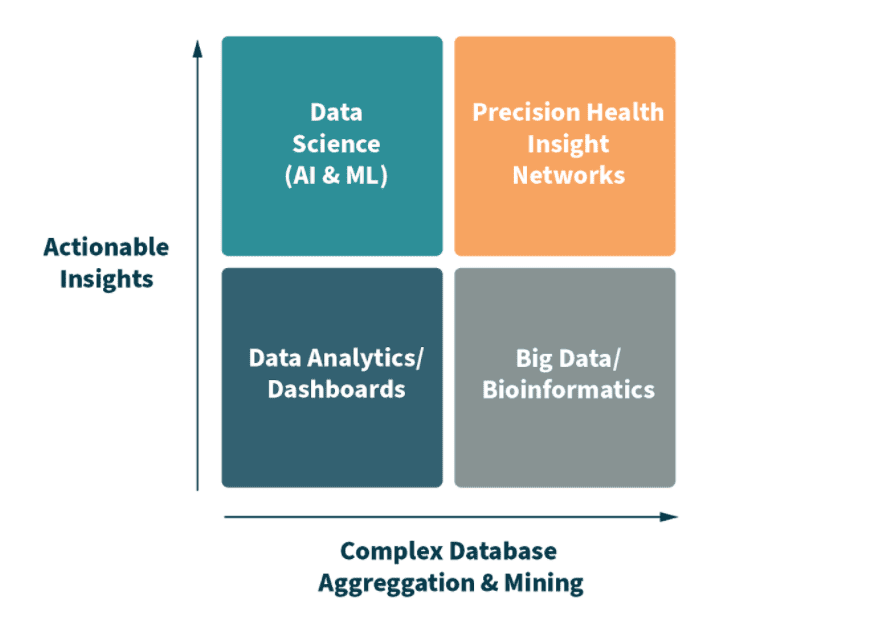
PHIN

The beauty of PHINs is they take the stress of wasteful practices out of the system and off the providers who are critical to help usher in this new era of personalized, high-value care everyone can benefit from and embrace—profitably improving patients’ lives through value-based care by identifying and connecting data to the delivery of high-value care.

We have all heard the stories of systems that have invested in data lakes and enterprise data warehouses that have not produced the meaningful and actionable insights promised. Can we all agree that most health systems, providers, and payers simply lack the expertise to securely ingest, organize, and normalize new and expanding data sets in real-time to drive better decision making and improve health outcomes? The cost and effort to maintain the data is growing out of control.

It is incredibly discouraging for our healthcare system to have so little to show after gathering trillions of gigabytes of patient data without usable and meaningful insights. 

We’re asking our caregivers to perform an impossible task in our data-rich world. Without the insights provided by precision health, having all of the practice-changing evidence and data sets in the world becomes futile–leaving administrators frustrated and care providers exhausted trying to keep up with complex volume-based models to remain profitable.

New insight networks for precision health solve these complex problems by transforming live data into valuable and actionable healthcare insights much like ATMs did in banking to give you valuable information for your financial assets. PHINs are helping patients and families make it out of the $17 billion healthcare delivery system unscathed by avoiding costly and harmful adverse events.  

Experts in Precision Health Insight Networks (PHINs) deliver on precision testing and prescribing for mass personalization that the old-school, volume-based, fee-for-service care models will never achieve. 

There simply is no room for these status quo models that deliver ineffective, harmful trial-and-error and costly, one-size-fits-all care that varies wildly from facility to facility. 

Now is the time to invest in Precision Health Insight Networks for high-value care. They deliver insights our healthcare leaders and providers can take action on with precision–the right patients, right tests, and right prescriptions. All right now.

These advances in healthcare from PHINs are occurring at the intersection of Digital Transformation, Personalized Medicine, and Population Health today.
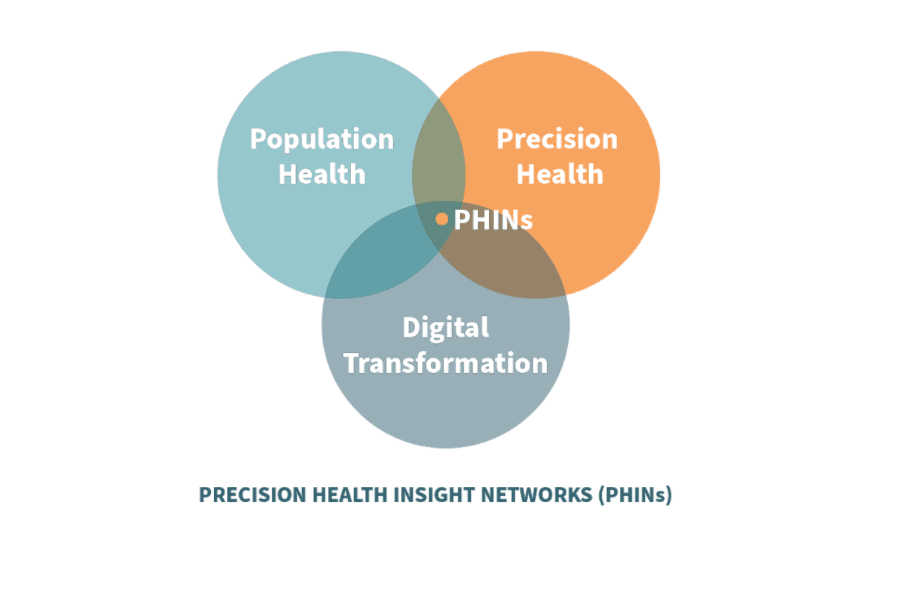
precision health insight network

This emerging category of solutions holds tremendous promise to deliver countless breakthroughs that will forever change the way healthcare is delivered, saving millions of lives and billions of dollars.


hc1 powers Precision Health Insight Networks (PHINs)

The hc1 Platform™ is crafted to address the problems with precision health today. The Platform is purpose-built to ingest, normalize, and organize disparate healthcare data at scale; infinitely expandable, immediately accessible, ultra-high availability on the AWS cloud stack. We are the company behind the emerging category PHINs, a topic we will explore in-depth during the Precision Health Virtual Summit with Becker’s and our partners AWS and Quest on November 16-17.


PHINs in action

Everyone knows what happened in the United States during March with COVID-19. All businesses were impacted by the simultaneous national shutdown. A number of businesses decided to furlough employees immediately and wait it out. Others went into action to help. Our CEO Brad Bostic chose to make a difference–by utilizing our technology stack and our lab relationships to help flatten the curve. Within weeks, we had formed a coalition of lab and technology partners, including AWS, to deliver a lab testing dashboard to aid in the fight against the spread. 

On April 3, CV19Dashboard.org was made available to frontline workers in healthcare and government with data from over 20,000 lab ordering locations. At the time, much of the data was locked away in case reports that came in as much as 8-14 days in arrears and riddled with errors. Our anonymized dashboard was near-real time with lab results directly from the sources of testing activity. It evolved to provide a real-time Local Risk Index (LRI) that showed leaders where hotspots of virus activity were trending around the US and in local communities. We even built a special version of the LRI county map for Dr. Scott Gottlieb and AEI.org that has had over 100K users since May 1. The hc1 team won awards and recognition for our response to the global pandemic. This coordination and collaboration across labs does not happen without PHINs built on top of outbreak signal solutions powered by AWS. We accomplished in weeks what would have taken others months, if not years, to pull together. 

Other solutions were spawned from this insight network solution for COVID-19. A great example is our solution for the state of Arizona with our partner Sonora Quest for their most vulnerable populations in Long-Term Care (LTC) facilities. It was a solution that provided a command center for employees and patients to monitor testing and the spread of the novel coronavirus. Arizona was lauded as a model state for how they addressed the crisis around testing and overcame issues related to data reporting. Our team helped make that happen.

Employers looking to get back into the office or back to campus, now have hc1 Workforce Advisor™ as well, to help them manage through this ongoing pandemic. Like the LTC solution, we have partnered with organizations in lab testing, as well as contact tracing app providers, to integrate our lab testing data, command center, and local risk insights for a full suite employer solution to help employees return with confidence.

Is your organization ready to deliver safe, effective, affordable, and personalized care?

Start by connecting data to delivery with better health outcomes.
By Lauren VanDenBoom
Share

hc1 and Becker’s Healthcare have partnered to bring together leaders in precision medicine for a free, two-day, special virtual event on November 17-18. The Precision Health Virtual Summit will focus on the changes our care delivery system needs as it transitions from fee-for-service to value-based care reimbursement models. Plus, public health leaders will share how the pandemic, as well as political and civil unrest, are impacting healthcare today for patients, providers, payors, and employers. 

Registration is open now at www.hc1.com/summit

Every patient down to their very own genetic makeup is unique. So why are we still treating everyone the same? The one-size-fits-all, trial-and-error healthcare model results in missed diagnoses, protracted illnesses, and even premature death.This outmoded approach also wastes $765 billion annually.

The answer to the problem – Precision Healthcare. When we start treating patients as individuals we deliver improved care and financial performance together. We’re bringing together leaders in the field of precision health to share how they’re solving precision health without budget-busting investments. 

The event will host some of America’s top thought leaders in Precision Health including:

  • Keynote speaker: Stephen K. Klasko, MD, MBA, President, Thomas Jefferson University, CEO, Jefferson Health
  • Brad Bostic, Founder, Chairman, and CEO at  hc1
  • Shez Partovi, MD, AWS Worldwide Lead: Healthcare, Life Sciences, Genomics, Med Devices
  • Donald Brown, MD, CEO at LifeOmic
  • Atul Butte, MD, PhD, Chief Data Scientist for University of California Health System, Priscilla Chan and Mark Zuckerberg Distinguished Professor of Pediatrics, Bioengineering and Therapeutic Sciences, and Epidemiology and Biostatistics at UCSF
  • Jane Dickerson,  PhD, DABCC, Co-Founder of PLUGS, Director of Chemistry and Reference Lab Services at Seattle Children’s
  • Steven Goldberg, MD, MBA, Quest Diagnostics, VP, Medical Affairs, Population Health and Chief Health Officer
  • Dave Dexter, CEO at Sonora Quest
  • Patrick Holland, Chief Financial Officer and Treasurer at Atrius Health
  • David Carmouche, MD, President at Ochsner Health Network, SVP of Community Care, & Exec. Dir. of Accountable Care Net.
  • Yolangel “Yogi” Hernandez Suarez, MD, Florida International University Associate Dean for Clinical and Community Affairs & Former VP and CMO at Humana for Population Health
  • Gary Stuck, DO, FAAFP, CMO at Advocate
  • Megan Mahoney, MD, Stanford Health Care Chief of Staff & Clinical Professor Medicine in Primary Care & Population Health
  • Latha Palaniappan, MD, MS, Stanford Medical Professor of Medicine in Primary Care & Population Health
  • Mick Raich, CEO at Vachette Path and Stark Auditing
  • Ken Furton, Florida International University Provost, Executive Vice President and Chief Operating Officer
  • Jessica Saba, PharmD, BCGP, Director, Value Based and Population Health Pharmacy at Highmark
  • Laura K. Mark, PharmD, Vice President of Pharmacy at Allegheny Health Network
  • Stu Beatty, PharmD, Director of Strategy and Practice Transformation at Ohio Pharmacy Association, Founder of Strategic Pharmacy Initiatives, Associate Professor of Clinical Pharmacy at The Ohio State University
  • Jim Gartner, EVP of Clinical and Product Strategy at AssureCare
  • David Freeman, GM of Information Ventures at Quest Diagnostics

Summit attendees will learn:

  • How leaders are addressing the top healthcare challenges faced by health systems, hospitals, campus leaders, and employers during this pandemic with precision health
  • The keys to how precision health can improve financial performance by leveraging existing data assets, eliminating waste, and delivering better patient outcomes without hiring an army of analysts or more pricey data scientists
  • How our panel of exceptional health system leaders are balancing volume-based fee-for-service and value-based care models together
  • Why the proliferation and adoption of a new category of Precision Health Insight Networks (PHINs) is needed more than ever and how these networks have played a crucial role in public health during the pandemic
  • What needs to happen next to deliver countless breakthroughs that will forever change the way healthcare is delivered, saving millions of lives and billions of dollars 

Anyone can attend, and the content will be of most interest to:

  • Hospital and health system leaders and payers who wish to reduce waste while saving more lives
  • Employers who want to protect their teams during the COVID-19 pandemic and keep their students on campus healthy
  • Leaders who will determine the future of data-driven care with precision health
  • Healthcare providers who want to deliver better outcomes for their patients
  • Educators who want to shape the curriculum for medical and allied health professions

We certainly hope you’ll join us for this important conversation. Visit www.hc1.com/summit for more information or to register today! 

By Lauren VanDenBoom
Share

December 13, 2019

Brad Bostic, hc1 chairman and CEO, was recently featured as a guest on Health Professional Radio (HPR). In the interview with host Neil Howard, Bostic discussed hc1’s strategic collaboration with Quest Diagnostics focused on improving costs and clinical impact of lab testing. Quest® Lab Stewardship™ powered by hc1® employs machine learning to harmonize laboratory testing across health systems to optimize laboratory test utilization. “Quest is really a leader in diagnostic services, one of the largest, if not the largest in the world,” Bostic said. “They’ve really become more and more focused on not just delivering high quality testing, but actually delivering insights and knowledge to caregivers to deliver higher quality of care.”

Bostic also discussed the current challenges health systems face in improving quality and cost-efficiency through laboratory stewardship. He said the future is bright when it comes to leveraging technology to enable more effective processes through clinical decision support. The technology is not intended to replace the human caregiver, but help them work more efficiently and provide insights. With this support, patients can be diagnosed faster and more accurately, ultimately getting better faster.

“We’ve got a really deep focus in improving lives with high value care,” Bostic said. “hc1 is all about making sure the right patient gets the right test and the right prescription, which ultimately allows the entire healthcare system to run effectively.”

The hc1 High-Value Care Platform™ eliminates waste and personalizes care for health systems and diagnostic laboratories nationwide by turning previously static lab data into actionable healthcare insights. For more information about hc1, visit www.hc1.com.

HPR is a health dedicated media news channel featuring health news, interviews and audio shorts. To listen to the complete interview, visit https://healthprofessionalradio.com.