By Lorri Markum
Share

April 8, 2022

If you’re a professional coach or athlete you expect your physical and mental wellness to be your work focus. If you’re a personal trainer, physical therapist or psychologist, for example, you also expect your mental well-being to be intertwined with your daily work.

Physical and mental well-being are two big attributes in our lives, but what about those of us with jobs that have nothing to do with athletics, coaching or physical or mental training? According to the latest information from the Federal Bureau of Labor and Statistics, Americans spend roughly 24% of their time in any given work week, remote or in-person, working. This results in nearly a quarter of our lives each week being devoted to our employment. So, what happens when that 24% is not being mindful of physical and mental well-being?

Let’s face it, most places of employment, until recently, have not invested in the physical and mental wellness of employees. Yet the CDC states that worksite wellness programs promoting physical activity can help create healthier employees, as well as proactively lowering healthcare costs for both employee and employer.

Worksite wellness programs can also:

  • Increase employee productivity
  • Reduce absenteeism
  • Increase employee morale
  • Help attract and keep high-quality employees

Mental wellness in the workplace has become more prominent, to the point that a one-of-a-kind center recently opened at Johns Hopkins dedicated specifically to mental wellness in the workplace. The Johns Hopkins Psychosocial, Organizational and Environmental (POE) Total Worker Health Center is devoted to improving workforce mental health. According to the POE, workplace mental health took on more importance and visibility during the pandemic, when remote work and high-risk work environments caused or exacerbated workers’ psychologically and behaviorally.

Daniele Fallin, Ph.D., co-director of POE noted that the pandemic brought workplace mental health issues to light for a lot of employers, specifically first responders and health care workers, but other employers became aware and started paying attention too.

Michigan State University identifies several ways to promote workplace wellness through easy and practical solutions for staying fit during working hours such as three-minute low-impact activities that have been proven to increase brain cognition and decrease the risk of serious health problems forming. The benefits of incorporating and encouraging positive physical health practices while working provide a win-win for both employer and employee.
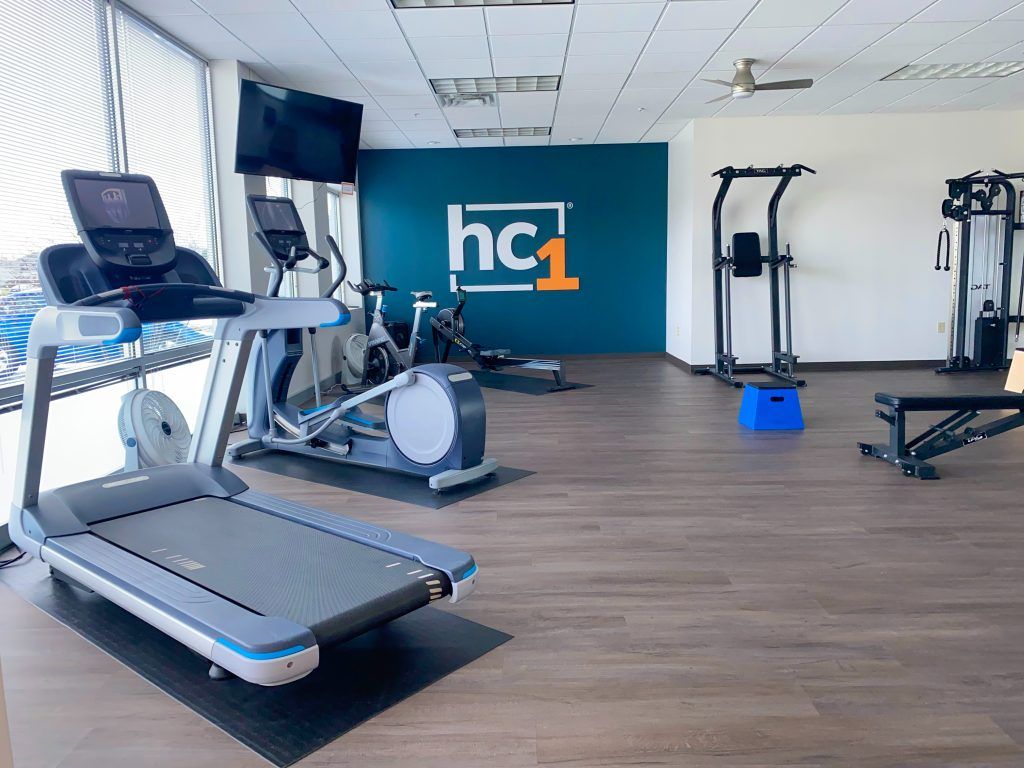
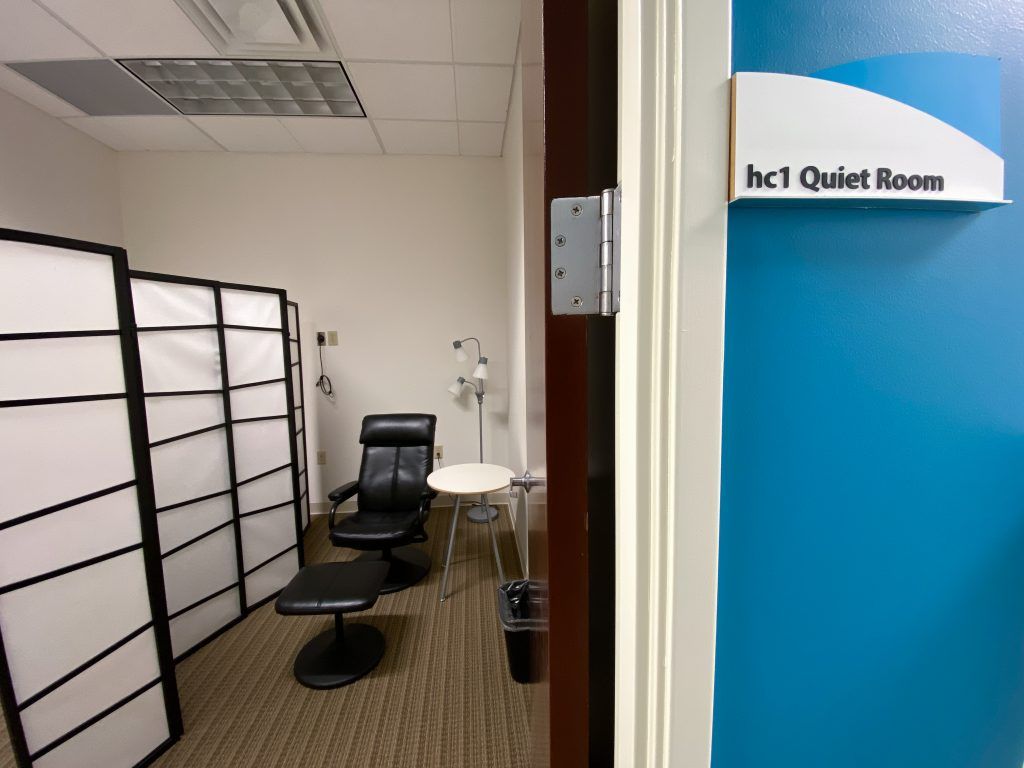
hc1 founder and CEO, Brad Bostic believes in an “exercise your mind, exercise your body” philosophy and expanded his dedication to precision health even further when it comes to those working at hc1 headquarters. Every employee has free access to a personal trainer on-site and a fully equipped gym. The culture of hc1 is employee-centric. Employees are encouraged to regularly move their bodies by visiting the gym at any given time throughout the day, after hours or on weekends, or simply taking frequent walks away from workspaces to break up time spent sitting. Staff is also encouraged to utilize workstations that best suit their personal health and wellness, such as stand-up or treadmill desks. Employees may take advantage of quiet time in one of several dedicated spaces that are aesthetically pleasing allowing focus and meditation, or just a few minutes to clear their heads.
Many employees enjoy access to hc1’s on-site personal trainer, Kristy Pingel, BS, Exercise Science and Physiology, who provides one-on-one personal training sessions. This is one of the perks available to every employee each week, with the option of additional weekly scheduled sessions before or during work hours. Pingel said, “coming into the gym is a way for employees to decompress. It provides an outlet for them to focus on themselves, forget about meetings or personal stressors and invest in their own wellness for 30 to 60 minutes. Others simply enjoy kickstarting their mornings by working out to set a healthy tone for the day. They always seem to leave with a higher sense of accomplishment and ready to take on the rest of their day with confidence and positive energy.”
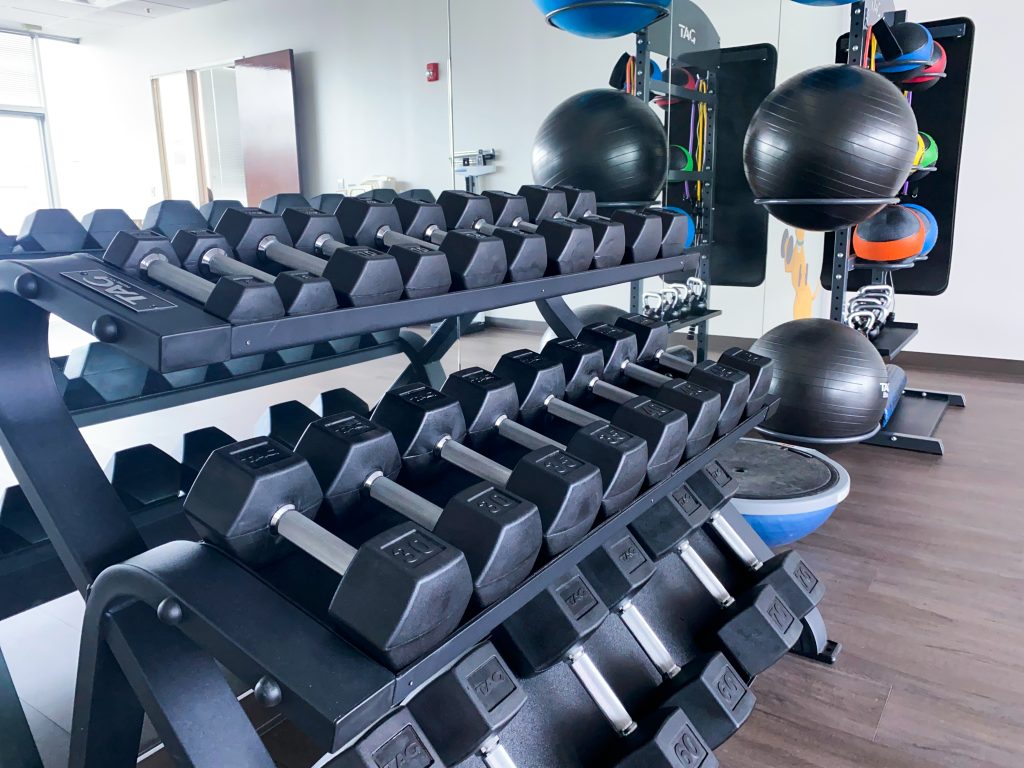
Aligned with hc1’s business vision that every patient should be treated as a unique individual it’s also true that each individual employee is different. Pingel assesses each person, takes into account their level of fitness and overall wellness and guides and oversees their workout to help achieve the individual’s maximum desired goal they’ve set for themselves.

For those not seeking a structured fitness regime with Pingel, employees have access to the gym freely each day or anytime after hours and on weekends to work out. A boxing heavy bag, basketball area, treadmill and ping pong are also available to employees at any given time in the recreational meeting area of the hc1 headquarters.

hc1 also recognizes the benefits of being Curious, Accountable, Collaborative, Ethical (CACE) which additionally fosters the mental wellbeing of employees. This is made possible and encouraged daily in various ways by hc1’s Team and Talent department from the time a new employee begins onboarding and throughout their employment. TnT fosters getting to know each individual employee, asking what they need and encouraging working hard, but having fun, too. Employees at hc1 are not just coworkers, but also a collective team that succeeds and celebrates together through supportive methods that enhance both professional and personal well-being.

Interested in joining the hc1 team? Check out these currently available positions.

By Lorri Markum
Share

April 14, 2022

Clinical labs could arguably be identified as the heart of any health system. Lab testing is the single highest-volume medical activity within a health system. Without the results and data from lab work, clinicians, providers and patients wouldn’t have clear insight into patient needs. Approximately 70 percent of medical decisions are based on pathology and laboratory test results.

hc1 looks forward to recognizing medical labs each year during Medical Laboratory Professionals Week. This year’s Lab Week takes place April 24–30, 2022. It’s an annual celebration of the medical laboratory professionals and pathologists who play a vital role in health care and patient advocacy.

The past two and a half years stressed many clinical labs beyond the point of reason. Overworked lab staff and the increasing demands of the pandemic thrust labs into critical overload in all directions with abundant tests data collection. Join us in recognizing the hard work and exceptional effort those working in medical labs provide by creating and sharing social posts during this week.

Over 2.3 trillion gigabytes of data are generated every year in healthcare. Harnessing the vast amounts of healthcare data generated by clinical laboratories is crucial to achieving goals that move toward a more value-based care framework rewarding performance over volume. Health systems and providers are increasingly looking to leverage clinical data to gain greater insights in order to develop new interventions that improve quality care.

We must collaborate to proactively remove data silos to quickly identify warning signs, achieve timelier disease detection and better health monitoring. As part of this collaboration process, it’s important to share knowledge and resources with others in the healthcare industry.

This April 27 and 28, hc1 is participating in the Executive War College (EWC) annual conference for clinical laboratory managers, pathology group managers, In Vitro diagnostics, lab sales managers, lab analysts and lab investors in New Orleans.

EWC brings lab executives and their teams together to learn what’s new, what’s working and how to lead their lab to success. On Wednesday, April 27, from 8:30 a.m. to 9:20 a.m. John Moyer, Senior Product Director, Lab Division, and Andrew Boyle, Operational Analytics Manager, Sonora Quest Laboratories/Laboratory Sciences of Arizona, will presenthttp://executivewarcollege.darkintelligencegroup.com/executive-war-college-agenda-2022. They will share a case study on how Sonora Quest Laboratories has used hc1’s robust Lab Insights Platform to unlock actionable insights within the lab’s data using real-time analytics. 

Additionally, hc1 will sponsor two events providing networking opportunities. Attendees will have a chance to meet, interact and converse with top leaders in the industry with chances to forge collaborations and learn more about solutions available to help eliminate some stressors labs currently face today.

Whether you plan to attend EWC or not, it’s important to both recognize the contributions of the people who work in the lab industry and seek collaborative opportunities to help advance the capabilities and efficiencies of medical labs. 

hc1 has been working with labs and transforming lab data into personalized healthcare insights® for more than 10 years. Solutions built on the hc1 Lab Insights Platform™ help labs better serve their clinicians and patients by enabling quick access to the insights needed to improve how they manage internal and external processes and relationships.

If you’re interested in collaborating and learning more, click here to schedule your customized demo.

By Lorri Markum
Share

June 16, 2022

Most labs in the U.S. are struggling with staffing shortages, supply chain disruptions and reconciling costs with reimbursements. Spending time and resources identifying specific healthcare providers who can benefit from their lab services is a challenge. Lab testing lays a foundation for value-based care that benefits everyone involved, but if labs and providers aren’t able to connect, the pain point is felt not only by the labs but also by health systems, providers and their patients. 

A recent article published in The American Journal of Managed Care notes that lab testing is where value-based care starts and is the gateway for appropriate diagnosis and treatment planning, ultimately impacting cost, quality and outcomes. From diagnosis to medications and from hospital admittance to discharge, 70% of patient treatment decisions are guided by lab results. Digitizing lab results across all healthcare settings and unlocking the potential of lab values is helping health plans improve the patient experience, improve the health of populations and reduce the per-member cost of health care. 

Working with numerous labs over the past 11 years, hc1 witnessed their stress to achieve sufficient growth. Recognizing that having the right data to target the right providers in their marketing and sales efforts would make a difference, hc1 sought to resolve some of the challenges labs face by creating hc1 ProviderView. By implementing targeted marketing and sales practices, labs have better opportunities to identify specific health systems and providers to offer them the services and products that best meet their needs and help them deliver improved care for their patients. 

hc1 ProviderView is an affordable solution that helps labs of all sizes find the right providers quickly with detailed, robust information and the convenience of importing contacts directly into hc1 Operations Management™

Brad Bostic, founder and CEO of hc1 has said that “hc1 ProviderView™ brings a critical component to our Lab Insights Platform that unlocks massive value for our clients: Instant access to more than 5 million provider records including detailed analysis of their medical claims and prescribing activity. With this powerful insight, lab clients can instantly identify providers that can benefit from their test offerings.”

An example of how ProviderView works—imagine a lab’s outreach team wants to spread the word about a new specialty test they’re performing without spending valuable man-hours researching, collecting, downloading and uploading lists. ProviderView can quickly and easily access the contact information they need.

With a few clicks in ProviderView, users can filter providers based on specialties (e.g. cardiology, gynecology) to see the nationwide distribution of providers with that specialty on the interactive dashboard heat map. That view instantly highlights the number of providers within a state, along with basic stats regarding specialty providers and the number of providers with public medical claims. At a glance, users may also view the top five provider specialists based on public medical claims and filter by geographic region (e.g. Florida, New York). When they have narrowed down the list of providers they are looking for using additional public medical and prescription claims filters, they can access the contact information for those individual providers immediately and import that information into hc1 Operations Management™ and begin contacting those providers in a matter of minutes.

ProviderView is streamlined, clean and easy to use, which saves users invaluable time targeting leads to share information about tests the lab has available and best suited for a given specialty.

hc1 is currently extending an opportunity for labs to try ProviderView free for 30 days! Included in the trial period is one user account and basic training. This allows interested labs hands-on experience using the solution.

Empowering labs with the tools they need to connect with the right healthcare providers is essential to their growth and success, ensuring patients receive the right tests. Interested in requesting a custom demo of hc1 ProviderView? Click here.

___________________________________________________________________________________

Lorri Markum is the marketing manager for hc1 Insights and has over two decades of corporate and nonprofit marketing leadership experience. Lorri specializes in B2B marketing and is SEO Certified. A graduate of Ball State University with a degree in psychology, digital communications and storytelling. For the past 25 years, Lorri has been a professional commercial photographer and photojournalist in the music industry. Before joining hc1 she served as the marketing manager for a nonprofit healthcare organization, serving 40 counties throughout Indiana.

By Lorri Markum
Share

February 18, 2022

As the need for operational efficiency continues to increase for hospitals and clinical labs, especially in the area of precision health, hc1 has introduced a Rapid Response Queue, an add-on for hc1 Operations Management™.

One hc1’s Lab Insights Platform solutions, Operations Management enables labs to automate and manage sales, service, and operational workflows, collaborate across departments and drive action and accountability with real-time analytics.

The hc1 Rapid Response Queue™ add-on unveiled this month, helps standardize and automate high-priority operational workflows involving clinical data. This effort will help clinical labs and facilities save time, streamline and enhance collaboration and transparency between departments and ensure patient support teams place immediate attention on the most important tasks. 

Featuring a unique, built-in countdown timer based on real-time clinical data and response time thresholds, the customizable add-on solution ensures action is taken and completed on time, every time. “Our goal with this solution is to empower multiple teams to collaborate in a single system and ensure providers are notified of time-sensitive results so immediate and appropriate care can be given,” said John Moyer, hc1 Lab Insights Platform Product Manager. “Rapid Response Queue will ensure patients are at the forefront of communication and tasks are completed in a timely manner.” 

Rapid Response Queue monitors clinical and operational data for predefined thresholds, such as critical or urgent test results. Once detected, a case is automatically created and associated with the patient, ordering provider and location. Cases are then displayed in the Rapid Response Queue. Patient support and customer service team members can use the queue to rapidly identify key information, claim, work and resolve tasks and issues with transparency across multiple departments within the allotted time.

Ultimately, hc1 Rapid Response Queue enables healthcare providers to:

  • Increase clinical efficiency
  • Standardize clinical practices and reduce manual work through automation
  • Ensure critical response times are met in order to improve the quality of care for patients 
  • Customize and automate work queues for service and patient care teams

hc1 Rapid Response Queue is available now for existing and new  Operations Management customers. 

Request a personal demo or, to learn more, watch this brief video.

By Lauren VanDenBoom
Share

September 15, 2021

On August 31 and September 1, hc1 and Becker’s Healthcare brought healthcare thought leaders and providers together from around the world to reflect and collaborate on the current state of precision health and the overall benefits of Precision Health Insight Networks (PHINs).

The Precision Health Virtual Summit, now available on-demand, featured keynote speakers including Katherine Capps, president of Health2 Resources and co-founder and executive director of GTMRx (Get the Medications Right) Institute, and David Nash, MD, MBA, founding dean emeritus of Jefferson College of Population Health at Thomas Jefferson University. 

The summit outlined persistent barriers and promising opportunities for precision health adoption, and it didn’t shy away from discussing the infrastructure, physician education, and collaboration required to make precision health a serious and positive reality for patients’ lives in the near future.

More than 2,500 people registered for the two-day event to examine how precision health is expanding globally and improving patient outcomes in a variety of care scenarios. hc1 CEO and chairman, Brad Bostic, shared that the summit was “an energizing, exciting opportunity to bring together people from all different parts of the healthcare value chain to talk about how we can solve this challenge of one-size-fits-all, trial-and-error care and move to more of a model that’s focused on bringing the most precise possible approach to healthcare and a more positive outcome for patients.” 

The Summit focused in on three key objectives: 

Pharmacogenetics and PHIN adoption is steadily growing

Precision health and data-driven advances as part of PHINs continue leading to more innovative tools and diagnostic risk assessments that improve the quality of life for patients and their family members. Further, advances in data-driven care using PHINs have and continue to reduce overwhelming complexities in our current care system. With these kinds of real-time insights, doctors are able to identify the right testing and prescriptions for optimal outcomes at the lowest cost. Even more promising, the summit highlighted steady growth for precision medicine adoption, especially in areas, such as cardiology and oncology. 

Based in rural South Dakota, Stephanie Lahr, MD, the CIO and CMIO of Monument Health, talked about how she and her team have taken a page from oncology research and the success shown in cancer treatment data using precision medicine. She said, “The data that’s out there to provide precision clinical decision support is ever growing. What does that look like outside of cancer care and what can we learn from its success to use in other focus areas of treatment?”

Precision health success relies on addressing physician burnout 

Physicians simply do not have time to consistently monitor the ever-changing genomic and prescription data, like new research, approvals, guidelines, and regulations. Even when this kind of information is available for patient diagnostics and prescribing practices, many organizations might not know it’s available at all. In order to fully adopt precision medicine, according to Jeffrey Kuhlman, MD, a General Manager for healthcare analytics at AdventHealth, the common technological infrastructure used in health care has to adapt and the methodology and practice of using precision medicine must be transitioned into physicians’ existing, day-to-day workflows. 

Kuhlman went on to say that “We can’t show doctors fifty pages detailing a patient’s genomics, we need to be able to share that information in an actionable way that is also incorporated into a doctor’s typical day-to-day workflow.”

He also added, “Having a multidisciplinary group that brings everyone to the table can open collaboration and agreement for local standards of care. For AdventHealth this has been very useful, but it can be intimidating, because it’s initially labor intensive. Once it’s set, it works.”

In addition to cost-savings and positive patient outcomes, Dr. Nash called attention to population health’s direct relationship with precision medicine and why a proactive, individualized approach to care would eliminate waste and save potentially millions of dollars in a localized economy. The most important benefit, he added, is being able to positively and comprehensively address health for a general population.

Where do organizations begin and how?

In one panel, the Medical Director for Pharmacogenetics at Invitae, Kristine Ashcraft, reminded us that even in clinical settings, “the biggest barrier to precision health adoption is the archaic, binary chassis that isn’t scaling at the necessary levels to make it successful. Test results might come back to us in a non-editable document that gets lost or isn’t incorporated into a singular system.”

Today’s health care systems are disparate networks that are disconnected from each other and that is largely because the new infrastructure required to connect these systems is labor intensive and seemingly too expensive. However, as Dr. Nash mentioned in his keynote, it is crucial to continue educating physicians, payers, stakeholders, and patients about the overall cost savings when the right prescription is given, at the right time, in the right dose. Eliminating the trial-and-approach methodology used today, he added, is doing the “right thing and the ethical thing” for the future of healthcare and patients themselves.

The 2021 Precision Health Virtual Summit presented a clear picture of precision health’s potential to impact and achieve all four arms of healthcare’s quadruple aim: improving population health, improving the patient’s experience of care, enhancing caregiver experience and reducing the rising cost of care. 

To learn more and watch the Summit on-demand, click here.

By Lauren VanDenBoom
Share

November 30, 2021

Giving back to our wider community is something hc1 and our team is passionate about. This Giving Tuesday, we would like to share some of the ways that hc1 gives back and a list of our employees’ favorite charitable organizations in case you are looking for ways to contribute.  

This December, hc1 is participating in the Salvation Army’s Angel Tree Program. Employees have generously donated toys, clothes and other requested items to ensure our adopted “Angels” receive some needed and wanted gifts.

hc1 also chooses to give back as part of our corporate gifting during this time of year by  sharing Cookies for Kids Cancer with our clients.  Cookies for Kids Cancer is committed to raising funds for research to develop new, improved, and less toxic treatments for pediatric cancer — the #1 disease killer of children in the U.S. 

Our hc1 team has a varied list of interests and shared the below list of causes they like to support. Whether you are interested in supporting an organization monetarily or just through generating awareness, here are some suggestions. 

 Area of Interest  Organizations 
 Animals Best Friends Animal Sanctuary
Exotic Feline RescueOur Lil Bit of Heaven Animal Rescue and SanctuaryThe Humane SocietyWorld Wildlife Fund
 Children 

CHERISH Child Advocacy Center

Children International

Foundation for Grieving Children

Horizons at St. Richards Episcopal School

LeBron James Family Foundation

Make-a-Wish

Riley Hospital for Children

St. Jude Children’s Hospital

Team Impact

 Community

Good Samaritan Network

Habitat for Humanity

Keep Indianapolis Beautiful

Natural Resources Defense Council

 Health

Alzheimer’s Association

American Cancer Society

American Foundation for Suicide Prevention

Doctors without Borders

Rock Steady Boxing

Special Olympics

Susan G. Komen

 Homelessness

Back on My Feet

Wheeler Mission

 Human Rights

A21

Equal Justice Initiative 

 Hunger

Gleaners Food Bank

Broomfield FISH

Fueled for School

Meals on Wheels

Midwest Food Bank

Second Helpings 

St. Vincent de Paul Food Pantry

 Veterans

Disabled Veterans of America

The Wounded Warrior Project

By Lauren VanDenBoom
Share

September 27, 2019

First, there was the hc1 mobile experience. With just a smartphone and Internet access, you could log into the hc1 URL and find what you need. A mobile-friendly website was a nice shortcut – a handy device for field access. Now we’ve created something better.

Introducing the hc1 iOS Mobile App 

We’ve developed an app that’s available for any current iOS smartphone. With a quick download, you can employ the power of your data through a user-friendly app. 

This new offering has the simple, clean look and responsive feel you’d expect from a well-designed mobile app. Large icons and collapsible menus that are easy-to-read make this an intuitive experience and invaluable tool. 

It’ll make your mobile log-in experience easier, and access remains at your fingertips.

The beta version of the hc1 mobile app will be available for any iOS smartphone beginning in January 2020. 

Check us out and discover all the ways hc1 can help improve lives with high-value care. 

By Lauren VanDenBoom
Share

October 22, 2019

On October 17, during the Day of Innovation at Butler University, hc1 Test Utilization™ received an Indiana Innovation Award. The award, presented by Centric®, recognizes individuals and organizations successfully leading the innovation charge in Indiana. To be eligible, the innovation must have been introduced within the last three years and be based in Indiana.

The judging committee considers four criteria:

  • Did the product/service meet an unmet need?
  • How unique is the product/service? Is this the first of its kind? If not, how is it different or better than existing products/services?
  • What new value has been created for the end-user?
  • What financial evidence or market acceptance information does the product/service have to support it? What is its quantifiable evidence of success?

Since its launch in 2017, hc1 Test Utilization™ has impacted millions of patient lives by transforming lab data into personalized healthcare insights. Across thousands of locations, customers are using Test Utilization to monitor ordering trends and gain insights into where testing can be optimized, ensuring patients get the right test at the right time.

“hc1 is proud to accept this Indiana Innovation Award,” said Brad Bostic, chairman and CEO of hc1. “Every year, an estimated $200 billion is wasted on excessive lab testing and associated treatments, resulting in added costs and risk to patients. With hc1 Test Utilization we set out to change that dynamic.”

A comprehensive solution, Test Utilization includes both strategic guidance and cloud-based technology. With it, healthcare teams have a dashboard of real-time lab data from in-hospital, outpatient and reference labs. By taking the guesswork out of launching an effective utilization program and proactively uncovering where unnecessary tests are being ordered, a health system can effectively monitor, take action and educate its physicians – all while creating a high-value, lean organization.

Test Utilization is part of hc1 High-Value Care Platform™, which eliminates waste and personalizes care for health systems and diagnostic laboratories nationwide by turning previously static lab data into actionable healthcare insights. At hc1.com read more about or request a demo of hc1 Test Utilization and other hc1 products that help health systems improve clinical outcomes and reduce medical spending.

By Lauren VanDenBoom
Share

June 24, 2019

Healthcare used to operate almost exclusively on a fee-for-service basis, meaning each service performed was a line item billed separately and regardless of the outcome. That era is passing. Increasingly, high-value care (HVC) is the new driving force. This trend toward a team-provided and patient-centered healthcare model impacts both physical and financial outcomes.

By Lauren VanDenBoom
Share

February 19, 2020

During a recent webinar, hc1 Director of Client Enablement, Maura Lee, gave a guided tour of hc1’s
latest new tool, the hc1 CRM™ app.

The iOS app puts the most highly used CRM sales features right at the user’s fingertips. From the app’s
eight main tiles users can quickly navigate to key record types and app features to view, create, and edit
hc1 CRM organization, contact, opportunity, case, task, and memo information.

To download the app, visit the iOS App Store and search for “hc1 CRM.”

Lee told webinar attendees they can maximize their efficiency with the app by 1) intuitively accessing all
key record types with a tap of a finger, 2) using quick action buttons to open a map or start an email or
phone call and use voice to text, 3) efficiently logging interactions with clients and review past
interactions, 4) quickly viewing critical information and access additional data in collapsible menus, and
5) using streamlined search capability to find clients and contacts.

If you missed the webinar it’s not too late to learn more about navigating and using the new hc1 CRM
app. Visit our CRM solutions page for more information about the app.